IN Brief:
- The redesigned wine bag-in-box line now processes 1,900 packs an hour, up from 1,500.
- DS Smith developed the corrugated pack and a dedicated forming machine together to improve line reliability.
- Warehouse capacity per storage location increased from 5,000 to 6,000 packs, according to the supplier.
DS Smith and Delhaize have increased the speed of a Belgian wine bag-in-box packaging line from 1,500 to 1,900 packs per hour by redesigning the corrugated pack and its forming equipment together. The 400-pack hourly gain represents approximately 27% more throughput at the reported operating rate. At the Zellik winery, the project addressed the interaction between the outer carton and the machine erecting it, allowing packaging geometry and mechanical handling to be specified as a combined system.
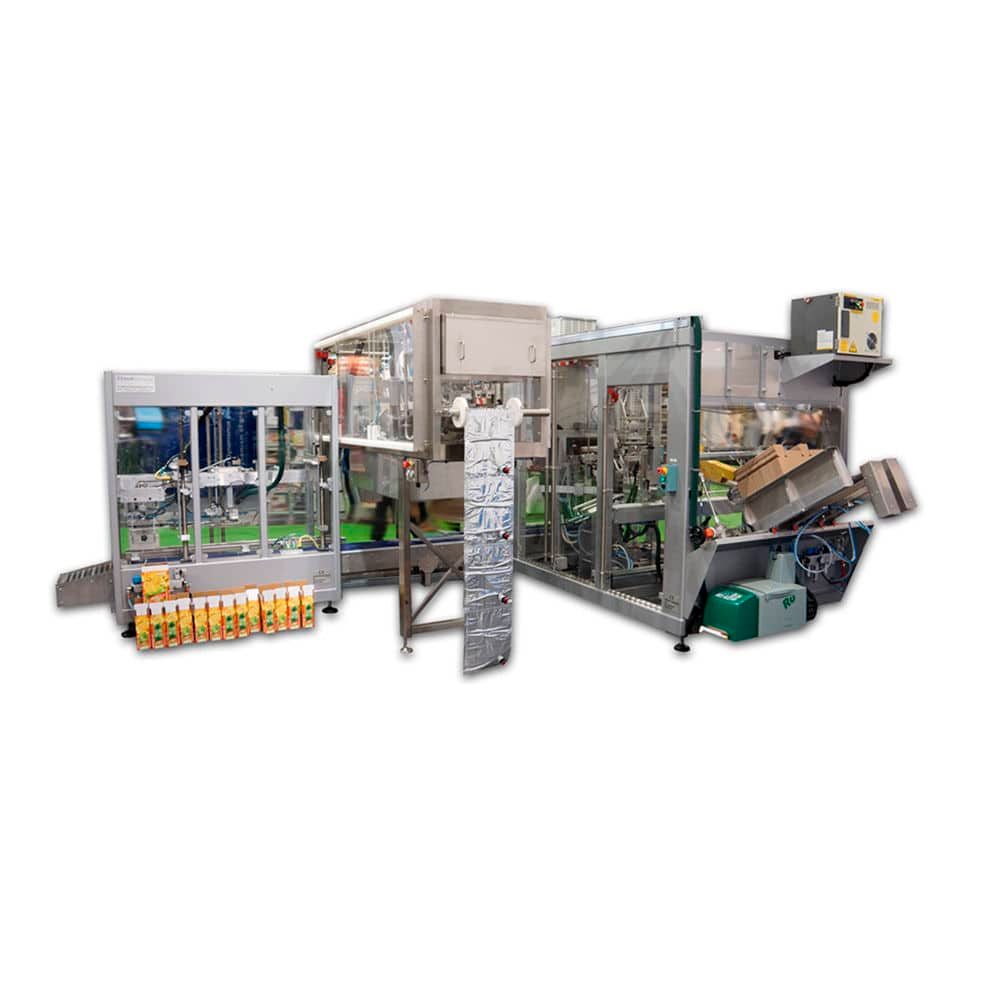
Delhaize’s dedicated former must repeatedly erect corrugated boxes to a geometry suitable for subsequent wine packing operations. The rate depends on how the blank is presented, folded and released without jams or distortion. Even modest differences in board stiffness, score alignment or friction at contact points can slow a line when repeated across hundreds of packs. Designing the carton and forming equipment together allows those tolerances to be considered at the same time instead of leaving their interaction to be resolved during commissioning.
DS Smith designed and built the forming machine around the revised Delhaize carton instead of specifying the two independently. According to the supplier, the result was more consistent pack quality and the elimination of nearly all interruptions previously experienced on the line. The higher rate is a reported packaging-line figure, not a measure of the winery’s annual production, and no breakdown of downtime or overall equipment effectiveness has been published. The practical achievement is a faster, more stable carton-forming operation within the existing production arrangement.
The Zellik operation packs wine for Delhaize in Belgium and Albert Heijn in the Netherlands, using bag-in-box formats that place a flexible liquid container inside a corrugated outer pack. The bag and dispensing components retain and deliver the liquid; the box provides support, protection and a printable surface. Its structural characteristics also affect machine forming, pallet stacking and distribution. Consistency at the erection stage is therefore connected to handling reliability throughout the packing sequence rather than to the appearance of the carton alone.
The forming sequence depends on precise interactions between the machine and the blank. Mechanical guides and forming elements must establish the required box geometry while allowing the corrugated material to fold without damage or irregular resistance. Board stiffness, crease position and dimensional tolerances determine whether the machine can repeat that sequence at speed. Matching the carton to the dedicated former reduces the scope for a nominally compliant packaging component to become a source of jams once it reaches the line. DS Smith attributes the observed production improvement to that integrated design approach.
DS Smith reports that the revised system requires fewer operators and has allowed labour to be redeployed towards quality control. It has not provided a before-and-after headcount, changes to shift patterns or the amount of operator time reassigned. The available evidence therefore supports an operational improvement and a change in labour allocation, but not a quantified reduction in staffing costs. The quality benefit is also described qualitatively rather than as a measured reject-rate improvement.
Storage has improved alongside line output. According to the company, the number of packs accommodated per storage location rose from 5,000 to 6,000. That represents 1,000 additional packs at each such location, or a 20% increase in the stated count. The source does not detail the pallet configuration, storage footprint or loading conditions behind the comparison, so the figure should not be interpreted as a 20% increase in total warehouse capacity. It does indicate that changes to the pack and its handling characteristics extend beyond the immediate forming station.
Changes to carton geometry can influence warehouse handling as well as machine speed. A pack has to remain stable in storage and transit, while its dimensions determine how efficiently pallet and racking space are used. Delhaize’s higher pack count per storage location suggests that the redesigned carton also improves space utilisation. The published figures do not establish a change in total warehouse capacity or transport emissions, but they show that the equipment project was evaluated beyond the forming station itself.
At an unchanged shift length, an extra 400 packs per hour would create additional theoretical packing capacity. Actual production, however, is controlled by product supply, downstream handling, maintenance, demand and the time the line spends running. A faster former cannot compensate for an upstream bottleneck or insufficient material supply. The published throughput figures establish what the revised packaging operation achieved, not its annual output or the utilisation rate of the entire winery.
At the reported rate, the upgraded line can handle 400 more packs in each hour that it runs, while Delhaize says the new arrangement needs fewer operators and has enabled staff to move into quality control. Its actual annual output will still depend on available wine, operating hours, maintenance and the performance of equipment upstream and downstream. The measurable results are the 27% increase in hourly packs and the rise from 5,000 to 6,000 packs per storage location — gains achieved by specifying packaging and machinery as one operation.