IN Brief:
- Cartonplast Ibérica plans hygienisation lines at La Garriga and Parla during 2028, subject to delivery of its expansion programme.
- The business is assessing a further Iberian facility for 2029 and expanding into packaging used for metal and plastic containers.
- Machine vision and digital traceability form part of a strategy for controlling reusable layer pads and pallets.
Cartonplast Ibérica plans to add two hygienisation lines for reusable transport packaging at its La Garriga and Parla centres in Spain in 2028. The installations are proposed for cleaning plastic interlayers used to separate stacks of empty food and beverage containers during transport. The company is also studying a new Iberian site for 2029, but has not confirmed a location or authorised a construction timetable. Both proposals form part of a 2027–2031 expansion programme intended to extend pooling services beyond glass packaging.
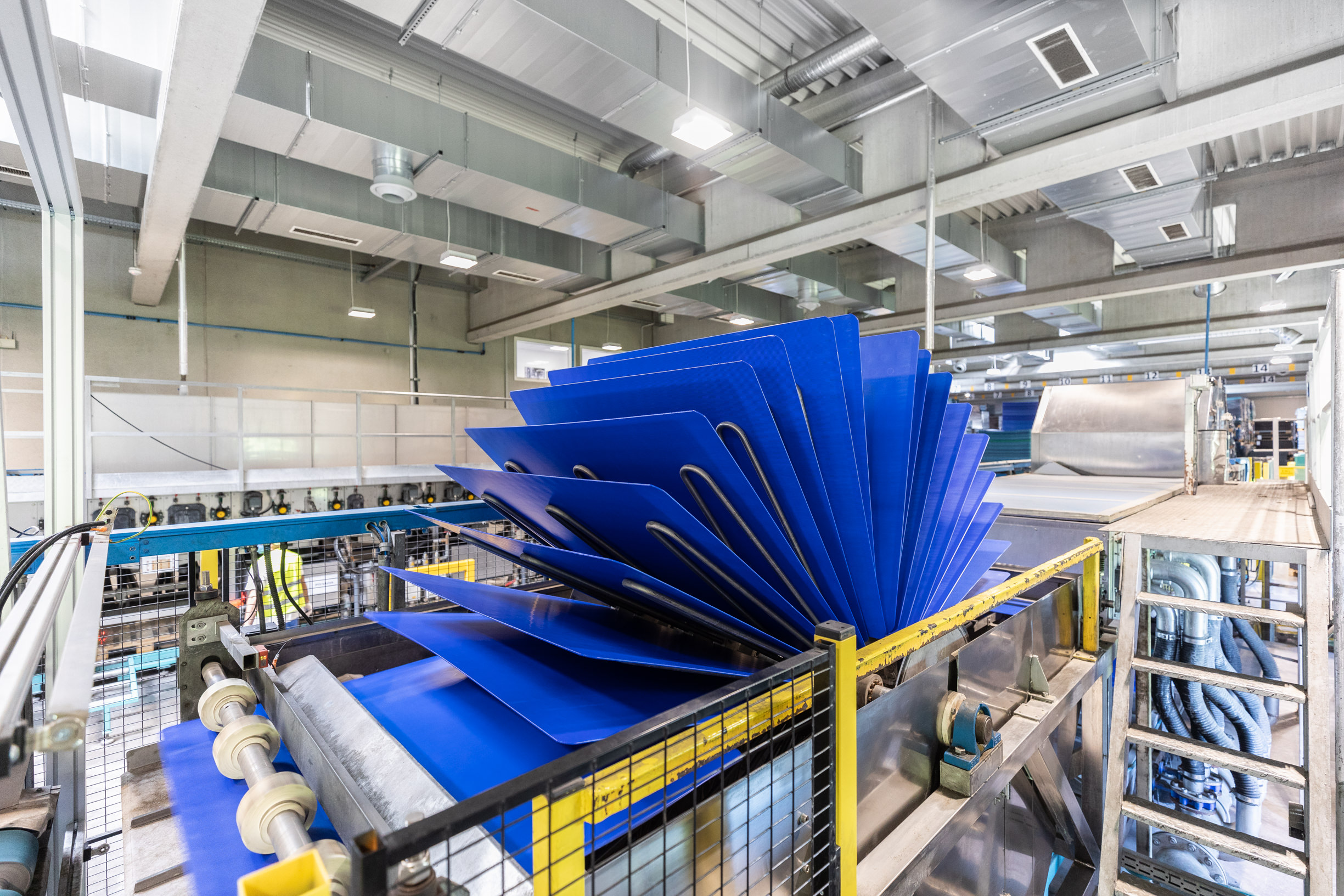
The planned investment concerns the packaging used to move empty containers between manufacturers and filling plants rather than the materials directly in contact with food. Cartonplast operates pools of reusable plastic layer pads, also called interlayers, and pallets. These are placed between stacked containers or loads, helping packaging manufacturers and customers transport large quantities of glass bottles and other empty packaging through industrial supply chains. The same assets can make multiple journeys when collection, inspection, washing and redistribution are organised as a managed loop.
The proposed installations would supplement an existing Iberian network of three operating centres in Spain and Portugal. Cartonplast currently reports annual washing capacity exceeding 45 million interlayers and more than 40 million movements of reusable assets. These are different measures: washing capacity describes the volume a treatment operation can handle, whereas movements describe activity across a distribution network. The company has not specified the additional capacity of either new line, the equipment supplier, or the investment allocated to the 2028 projects.
Returned interlayers and pallets may carry dust, fragments of packaging, transport residues or visible damage acquired during repeated distribution cycles. Cartonplast collects these assets, sorts and inspects them, washes usable items, and returns them to circulation. Faults that are missed at this stage can affect the stability of subsequent loads, while contaminated transport surfaces require an appropriate cleaning process before reuse. The assets principally support the movement of empty containers; they should not be described as food-contact packaging requiring exactly the same treatment as a product-contact surface.
The number of reuse cycles achieved also depends on how reliably customers return assets to the network. An efficient washing line can remain underused if returns arrive irregularly, while slow inspection, drying or dispatch can constrain a busy operation despite adequate washer capacity. Adding lines at La Garriga and Parla may relieve local constraints, but the effect on network throughput will depend on return volumes, line uptime, staffing, water use, and transport between collection points. Cartonplast has not released projected utilisation or processing-speed figures for the planned equipment.
Camera-based inspection and artificial intelligence are becoming part of Cartonplast’s control systems, with the company identifying material inspection and traceability as development priorities. Vision systems can distinguish visible defects or asset characteristics when lighting, camera positioning, and classification rules are suitable for the materials examined. Reliable tracing also requires a link between an inspected asset and its subsequent handling record. Cartonplast has not disclosed the inspection architecture, detection accuracy, or installation timetable, so no reduction in false rejects or manual checking can yet be quantified.
At La Garriga, managing director José María Carrasco says Cartonplast has invested approximately €500,000 in infrastructure and automated pallet washing machinery at the site. The company operates three centres across the Iberian market, managing over 40 million annual asset movements and washing capacity above 45 million interlayers. The announced pallet washing investment is separate from the proposed two interlayer lines in 2028, and its cost should not be presented as the budget for those future installations.
Cartonplast is also extending its reuse service to plastic food and beverage packaging and metal cans. Those operations differ from traditional glass bottle movements in container geometry, load stability, hygiene considerations, damage tolerance and transport frequency. A suitable pooling system has to fit the existing handling equipment of packagers and fillers while providing a reliable return route for empty transport assets. Expansion into finished-goods distribution would introduce another set of interfaces with warehouses, regional distribution centres and retailers.
The European Packaging and Packaging Waste Regulation also creates requirements and reuse objectives for specified packaging categories, including some transport packaging, although their application depends on the route and regulatory conditions. Wider adoption of reusable transport supports requires a workable recovery network as well as suitable packaging formats. Environmental performance depends on how often the assets return, the energy and water used in cleaning, transport distances, and loss or breakage rates. Cartonplast has not provided a comparative life-cycle assessment for the planned new lines.
Cartonplast forecasts revenue of about €24 million in 2026, roughly 7% above 2025, and expects growth of 8% to 10% in 2027. The next operational milestones are equipment orders and commissioning specifications for La Garriga and Parla, alongside a decision on the proposed 2029 plant. Until those are confirmed, the two washing lines remain planned additions rather than production assets already increasing the availability of reusable transport packaging.