IN Brief:
- Cranfield University and HyphaPro are investigating whether engineered filamentous fungi can produce the egg-white protein ovotransferrin.
- The NAPIC-funded project aims to establish proof of concept, rather than commercial yields or an approved ingredient production process.
- The protein has iron-binding and antimicrobial properties, but strain productivity, separation, purity and regulatory status are unresolved.
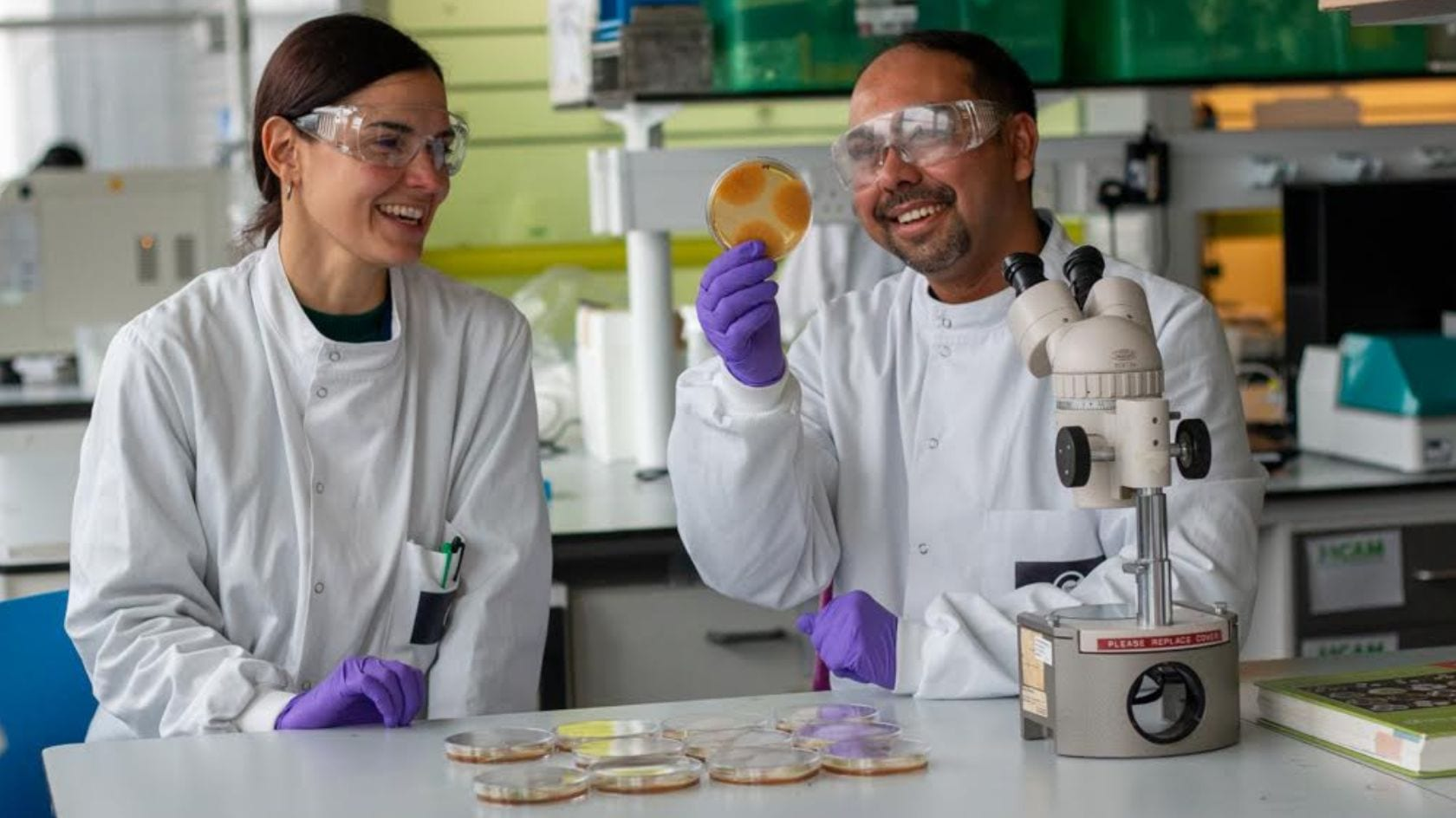
Cranfield University and biotechnology company HyphaPro are investigating whether filamentous fungi can produce ovotransferrin, the iron-binding protein found in chicken egg whites. The National Alternative Protein Innovation Centre (NAPIC) is funding the research, announced on 10 November, at Cranfield’s Magan Centre of Applied Mycology. The aim is to establish a proof-of-concept fermentation route using specially engineered fungal strains, with commercial development dependent on results that have not yet been reported.
Ovotransferrin contributes to the iron-binding and antimicrobial properties of egg white and has potential uses in functional foods and dietary supplements. Its manufacture as an isolated ingredient would be different from reproducing a whole egg-white system. Baking and other food processes use the combined behaviour of several egg proteins, together with water and other components, to achieve aeration, emulsification, structure and flavour. Producing ovotransferrin alone would not establish that it can replace whole egg or egg white in those applications.
Dr Abhishek Baghela, senior lecturer at Cranfield, leads the project with lecturer Dr Carla Cervini and Dr Andrew J. Foster, director of HyphaPro. The team will assess specially engineered fungal strains as production hosts. Filamentous fungi already have established uses in biotechnology, but successful manufacture of one target protein does not establish suitable expression or secretion of another. Cranfield has not named the selected fungal species, described the genetic modifications or published a production titre for ovotransferrin.
Precision fermentation cultivates a production organism under controlled conditions so that it expresses a selected molecule. Nutrient concentration, temperature, pH, oxygen transfer and the behaviour of the growing fungal culture can all affect the resulting product. For this project, the first technical test is whether the strains can make identifiable ovotransferrin with the necessary properties. Process stability, purification and reproducibility would then determine whether the approach could be developed beyond the laboratory. No validated yield, operating window or batch size has been disclosed.
Recovering usable protein introduces a separate series of process steps. Depending on whether it remains within the organism or is secreted into the medium, production may require biomass separation, clarification, filtration and further purification. Each operation affects achievable recovery and the final ingredient specification. These are general engineering considerations, not a disclosed Cranfield process design: the collaborators have yet to publish a recovery sequence, final purity, product specification or quantity of usable protein produced per batch.
A laboratory demonstration would still leave significant manufacturing work. Longer runs and larger vessels need consistent growth and mixing, contamination controls, and reliable monitoring of the target protein. Filamentous growth can increase culture viscosity and change oxygen transfer, making scale-up dependent on more than the activity of the engineered strain. Equipment selection and process economics therefore remain open questions until the project establishes repeatable expression and recovery. Cranfield has not announced a pilot-plant commissioning date.
Poultry disease and agricultural cost exposure are among the reasons Cranfield gives for testing a different supply route. Egg-based ingredients depend on animal production, whereas fermentation could potentially separate the supply of a particular protein from egg collection. The alternative process would still need nutrients, industrial utilities, equipment, skilled operators and reliable quality control. It has not yet been shown to offer lower costs, emissions or more secure supply for this protein, so those potential benefits cannot be treated as completed results.
Any resulting food ingredient would also need an assessment appropriate to its intended market and use. The fact that ovotransferrin naturally occurs in eggs does not by itself authorise a product manufactured using engineered microorganisms. Production strain information, potential residual materials, product identity, safety and allergen considerations would need to be evaluated under applicable rules. An animal-free route may avoid sourcing the protein from eggs, but claims about vegan suitability require examination of the complete manufacturing process and its inputs.
NAPIC’s support makes this a research project within the wider development of alternative proteins, but its target is deliberately specific. The researchers are testing an individual functional protein, rather than a complete imitation of egg ingredients or a replacement for poultry farming. If the process works, related approaches could be assessed for other proteins, although expression, processing and functional performance would have to be demonstrated separately in each case. The collaboration has not released a commercial partner trial or product launch timetable.
The next evidence will be measured expression, confirmation of the protein’s identity and properties, and reliable recovery from the fermentation system. Those results would provide a basis for assessing larger-scale trials and manufacturing costs, neither of which can yet be calculated from published data. Cranfield and HyphaPro have set out a defined technical objective, but no industrial production site, validated operating rate or authorised food ingredient has been announced.