IN Brief:
- Royal Avebe has added an industrial electric boiler at Foxhol without increasing the site’s maximum grid connection.
- Schneider Electric and AVEVA integrated process control, power data, and load management across more than 1,000 points.
- Grid congestion is forcing many European processors to redesign energy use inside the fence before they can rely on external network expansion.
Royal Avebe has electrified part of its Foxhol production site in the Netherlands without increasing the plant’s existing grid connection, combining a new industrial electric boiler with digital load management and process control. The project, delivered with Schneider Electric and AVEVA, replaces fossil-fuel heating in the targeted area of the starch derivatives site while keeping total electricity demand within the limits of the site’s contracted capacity.
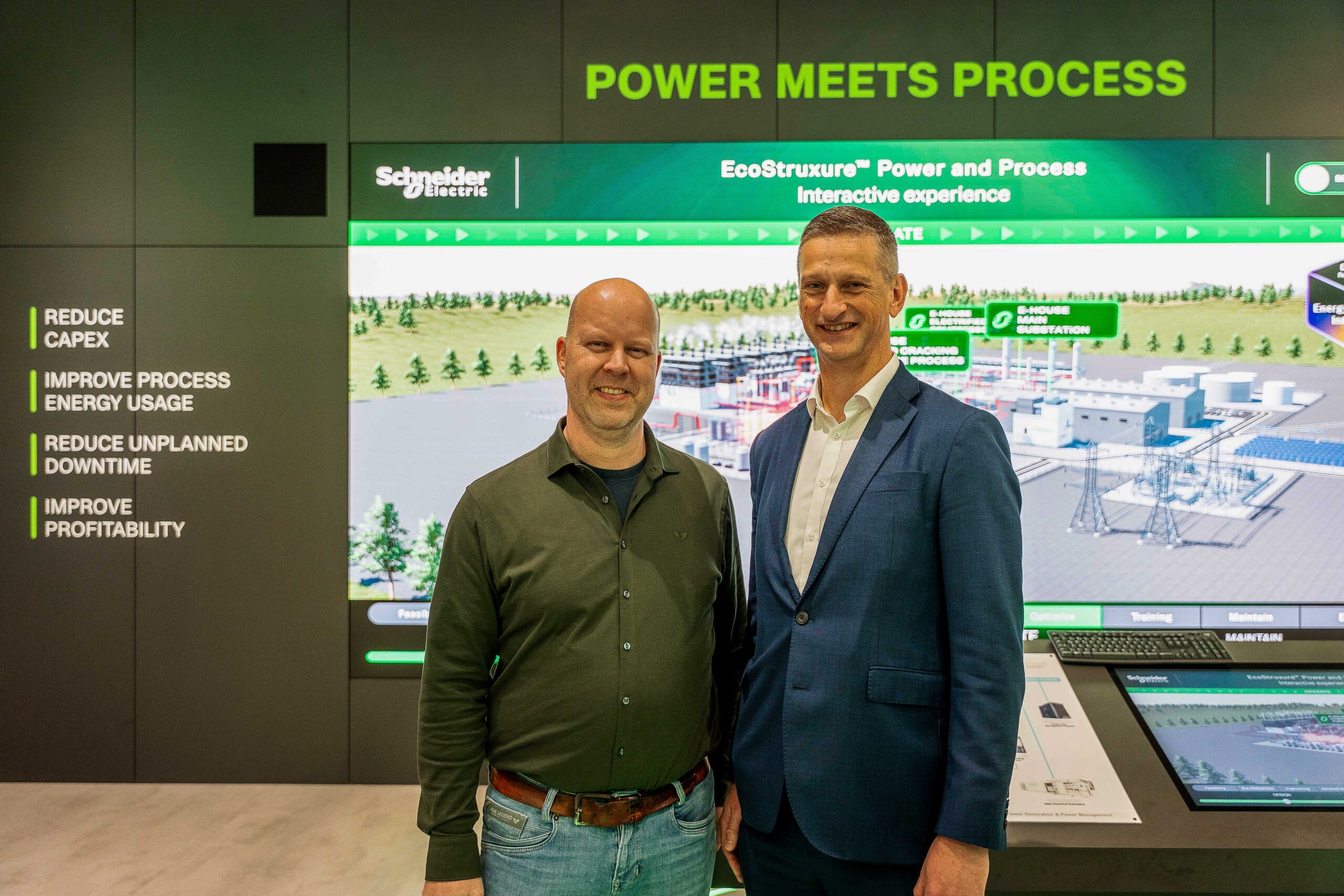
Foxhol is a complex industrial operation in Groningen, combining several production facilities with utility supply to third parties. At the centre of the new setup is an energy-management architecture that brings together process control, power data, and real-time operational visibility. Schneider Electric says the system integrates more than 1,000 data points across the site, including 542 smart medium-voltage relays, allowing the plant to monitor, coordinate, and shift loads more precisely.
When demand on the wider network rises, electrical loads can be adjusted so the site remains within its contracted limit and technical operating boundaries. When local conditions are more favourable and renewable power is more abundant, the plant can absorb additional electricity and support the surrounding network. Foxhol is therefore not only using more electrified process equipment, but also operating with a more active and flexible energy profile.
That approach is attracting attention because grid congestion has become a serious obstacle to industrial investment in the Netherlands and across Europe. Thousands of businesses in the Netherlands are waiting for new or upgraded electricity connections, and the development timeline for new high-voltage infrastructure remains long. For heat-intensive food and ingredient plants, this creates a difficult position. Electrification is increasingly central to emissions reduction plans, but the physical grid upgrades needed to support it are often years away.
Food and ingredient sites are particularly exposed because many depend heavily on process heat, steam, and utility systems that are harder to decarbonise than low-temperature electrical loads. Starch, dairy, and other continuous-processing sectors are under pressure to lower emissions while maintaining reliability, product quality, and cost control. That has led more manufacturers to look at what can be done inside the plant boundary first, through load flexibility, controls integration, and better use of the capacity already available.
Avebe has set a target of reducing emissions by 30% by 2030 while improving energy efficiency by 1.5% each year. The Foxhol installation gives the company a route to advance both objectives on an operating site rather than waiting for wider network reinforcement. It also creates a digital foundation for future additions such as on-site renewables and more advanced IIoT-based asset monitoring.
For processors facing similar constraints, the project offers a practical example of how electrification is increasingly being tied to energy orchestration rather than treated as a stand-alone equipment swap. The more tightly a plant can connect utilities, process controls, and real-time load management, the more room it may have to electrify within existing limits. In parts of Europe, that is becoming an increasingly important part of industrial strategy.