IN Brief:
- Demos Ciclitira was established in London in 1926 and now operates from Braintree, Essex.
- Its current factory has five flow-wrap machines, two fruit washers, chopping equipment, manual packing, and ingredient mixing capability.
- The centenary follows Gerald McDonald’s 2025 acquisition and an AA+ BRCGS audit result achieved in 2026.
Demos Ciclitira is marking its centenary in 2026, one hundred years after Demos Ciclitira established his own business in Monument Street, London, following earlier family involvement in the Greek currant trade. The company now operates from Braintree, Essex, where importing has been joined by washing, chopping, blending, packing, quality control, storage, and distribution for manufacturers, wholesalers, retailers, and bakery customers.
The change in operating model mirrors a much wider shift in ingredient supply over the past century, because an importer that once moved dried fruit through brokers, dealers, and wholesalers now carries considerably more processing responsibility before material reaches a customer’s factory. Specifications increasingly cover cleanliness, traceability, pack format, ingredient condition, segregation, documentation, and customer-specific preparation, moving the supplier closer to the manufacturing process than the trading structure through which Demos originally developed.
Current capacity at Braintree includes five flow-wrap machines, two bulk fruit washers, an industrial chopping unit, and a manual packing area, with pre-printed film formats extending from approximately 50g to 2kg through the automated operation and additional configurations available across the wider packing service. The site also handles ingredient mixing and re-cleaning, using potable-water fruit washers to remove debris and stones, while products that do not require washing can be blended through vibrating-table systems.
Dried fruit remains central to the portfolio, including raisins, currants, sultanas, figs, apricots, cranberries, and dates, although the business now also handles grains, seeds, beans, peas, lentils, quinoa, chia, and other dried ingredients. That broader range increases the number of specifications moving through the site and requires segregation and traceability systems capable of following material from import through processing, packing, warehousing, and final distribution.
Quality controls have developed alongside the equipment base, with Demos maintaining BRCGS certification and full traceability across its operation. The company achieved an AA+ rating following its audit in March 2026, giving the centenary a current manufacturing milestone beyond the anniversary itself and demonstrating that a business founded around commodity trading is now operating against contemporary retailer and food-industry assurance standards.
Ownership changed in 2025 when Gerald McDonald Group acquired Demos, bringing together two long-established Essex ingredient businesses and extending the parent company’s product range beyond juices, purees, herbs, and spices into dried fruit, grains, seeds, and natural foods. George Harker, which has operated alongside Demos and traces its own history to 1826, is also marking an anniversary this year, creating a combined 300 years of trading history across the two names.
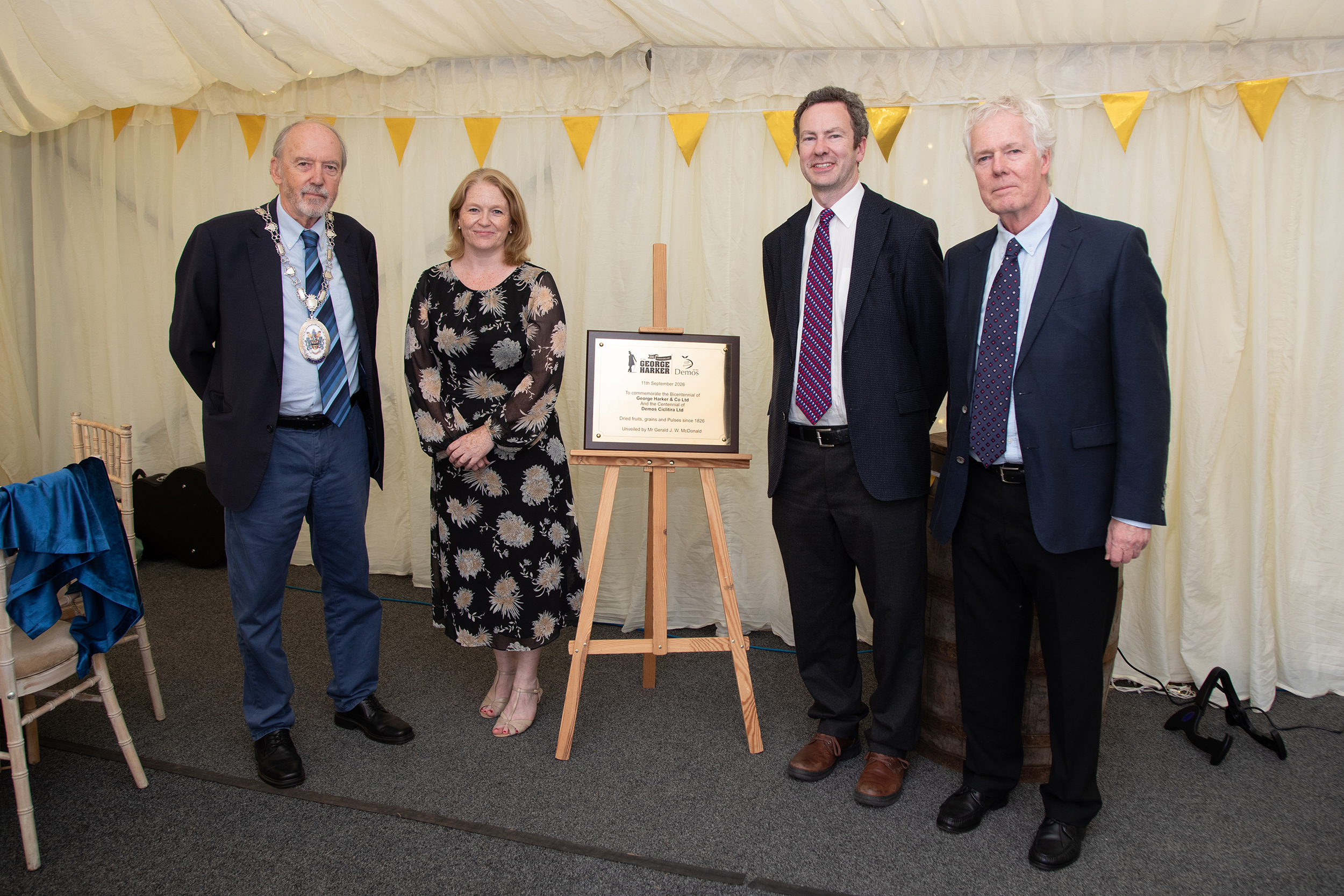
The centenary celebration at the Essex premises brought colleagues and guests together around that history, although the more consequential development has taken place gradually inside the factory as customer requirements have moved from bulk supply towards controlled processing and flexible packing. Flow wrapping, own-label formats, bulk washing, ingredient blending, chopping, and hand packing allow the same operation to serve industrial customers buying prepared ingredients as well as retail and wholesale customers requiring finished packs.
Those services also make the business more exposed to the quality of incoming crops, which can vary through season, origin, weather, and storage before the material reaches Essex. Washing and sorting can remove some physical contamination, while blending and chopping can prepare ingredients for specific applications, but neither process can compensate for poor raw material procurement, leaving supplier relationships and origin control connected closely with the performance of the packing operation.
Demos’ sourcing history gives the company long experience in internationally traded ingredients, but modern food production places additional pressure on continuity because crop failures, freight disruption, exchange rates, and changing border requirements can alter availability before a manufacturer is ready to change its specification. Maintaining several origins and a broader product portfolio provides options, although each alternative still has to satisfy quality and technical requirements before it can be substituted into an established recipe or production line.
The Braintree plant consequently represents a different business from the importer established in Monument Street even though dried fruit still connects the two. Product now moves through mechanical washing, chopping, mixing, automated packing, hand packing, quality checks, warehousing, and distribution under audited systems, giving Demos control over manufacturing steps that would once have sat further downstream with wholesalers or food producers.
A centenary does not protect an ingredient company from the pressures likely to shape its second century, since crop volatility, food safety requirements, packaging regulation, retailer standards, and customer consolidation continue to alter the economics of supply. Demos enters that period with new group ownership and an established processing base in Essex, while the durability of the business will continue to depend on the same practical requirement that underpinned its earliest trade: delivering ingredients in the condition, quantity, and specification required when customers need them.