IN Brief:
- Dennis Group has formalised a growth-ready planning approach for food and beverage facility projects.
- The model covers layout, utilities, life safety, stormwater, docks, and phased infrastructure from concept stage onward.
- The aim is to support expansion without forcing costly redesigns or operational disruption later in a plant’s life.
Dennis Group is putting forward a structured planning model for food and beverage manufacturers that want new facilities, or major upgrades, to remain expandable long after first commissioning. The company’s Growth-Ready Facility Planning approach is built around the idea that expansion risk is usually fixed early, when layout, utilities, and site assumptions are still being set.
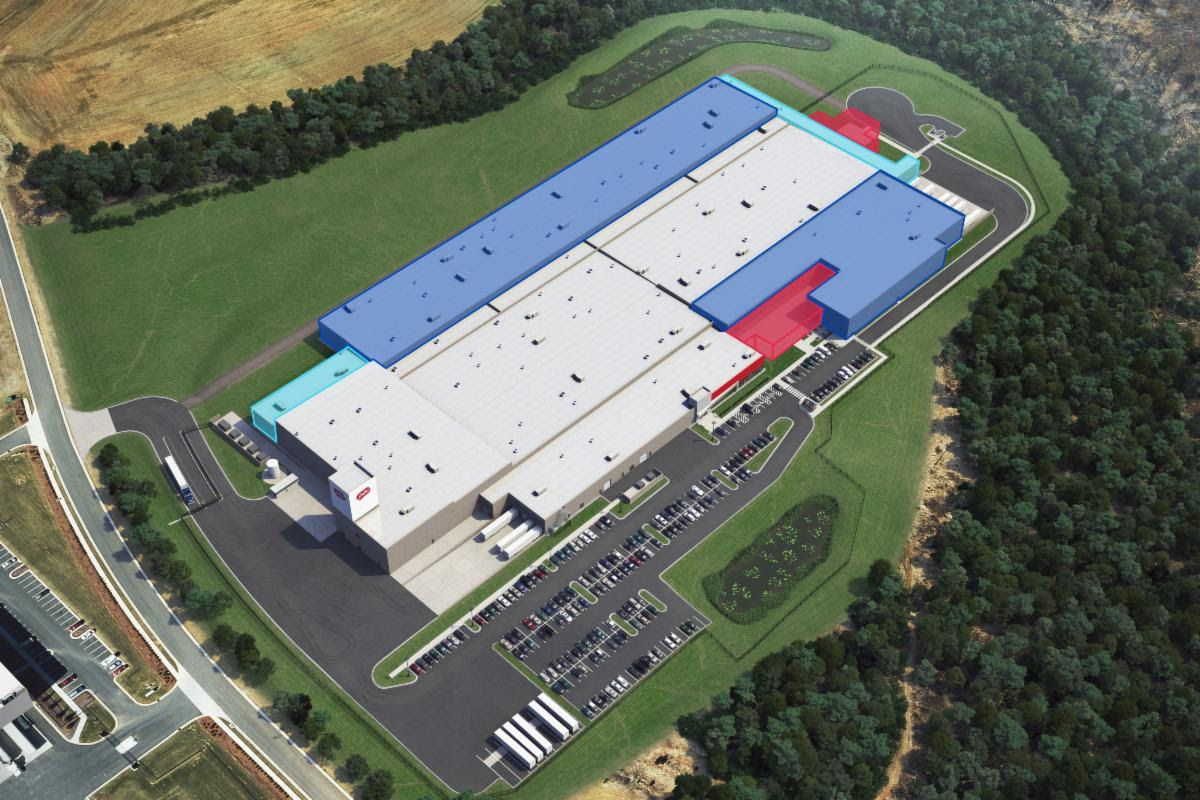
The framework starts at concept stage with scenario modelling and master planning for ultimate build-out, rather than designing only for immediate capacity. Dennis Group says that means looking at process and material flows, wall and column placement, storage and warehouse requirements, and future automation from the outset so that day-one efficiency does not come at the expense of later flexibility.
Safety and compliance are also treated as expansion variables rather than late-stage checks. The approach includes evaluations of exit travel distances, ceiling heights, fire separations, and fire pump capacity to test whether a facility can remain compliant as its footprint grows. On utilities, the company is advocating phased strategies for systems such as steam, compressed air, and refrigeration, using modular headers, right-sized equipment by phase, and oversized rooms and access paths instead of loading a project with idle spare capacity.
Site planning is handled in the same way. Dennis Group says long-term stormwater modelling can establish drainage backbones sized for future roof area, helping avoid repeat excavation, grading changes, and re-permitting when expansion occurs. Dock and truck circulation are also designed with later phases in mind, including structural knock-outs and phased traffic planning intended to keep shipping active while additional square footage is brought online.
The company’s argument is that these decisions work best when process engineering, utilities, building systems, packaging integration, and construction are coordinated together from the start. Dennis Group has worked exclusively in food and beverage since 1987, and its published service model already places master planning, sanitary design, utility integration, and future expansion among the core considerations in plant development.
The planning model is aimed at both greenfield projects and pre-expansion assessments for existing plants, where hidden infrastructure limits often appear only after a project is under way. Further details are available via Dennis Group’s conceptual design and master planning page.