IN Brief:
- The installed Elopak E-PS120AH line is rated for up to 12,000 cartons per hour.
- Dreher lists 500ml, 700ml and one-litre carton formats for chilled and ambient products.
- Commercial output began shortly after commissioning; the factory is designed to accommodate a possible second filler.
Dreher Group has expanded its manufacturing offer with an Elopak aseptic carton filling line at its Stockach operation in Germany, bringing consumer-ready packaging into a business previously focused heavily on fruit-based raw materials and semi-finished products.
Elopak described the investment on 7 October 2026. Dreher independently confirms that the line is operating and can fill up to 12,000 units per hour, supporting chilled and ambient products in 500ml, 700ml and one-litre carton formats.
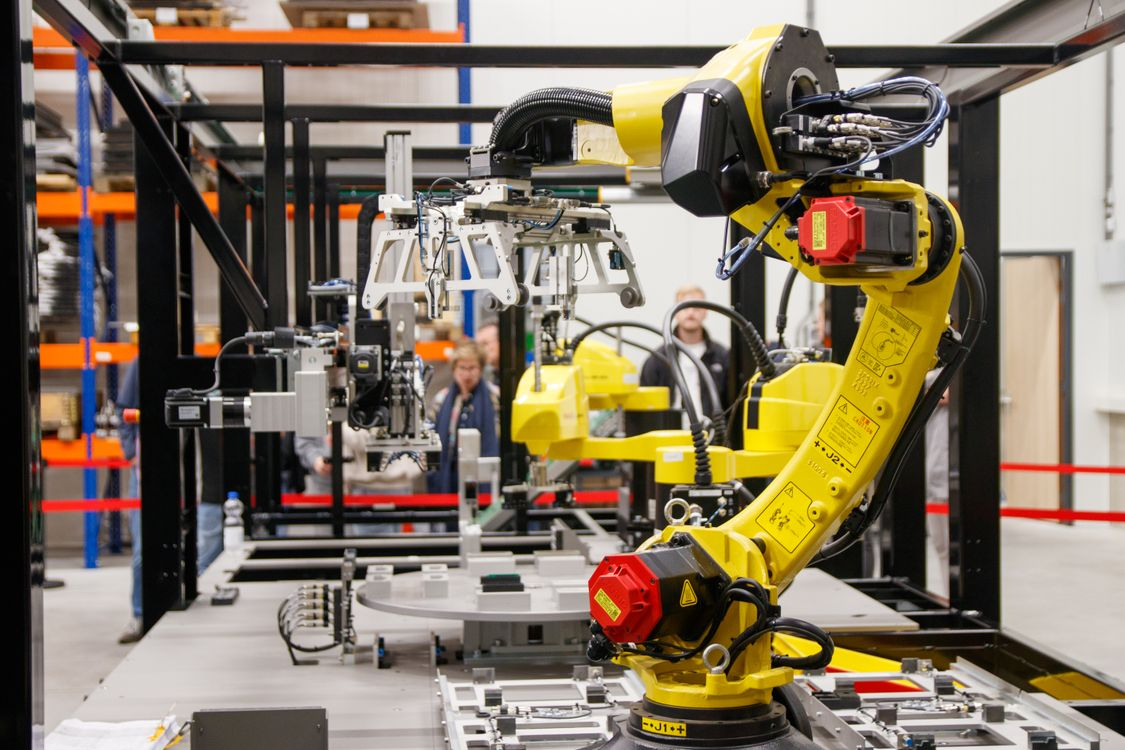
The installed equipment is identified as an E-PS120AH aseptic filling machine. Its stated maximum throughput is a manufacturer and operator specification, not an independently measured average across every product or operating shift.
Dreher processes fruit into juices, concentrates and purées and has also developed capabilities in plant-based ingredients. Offering filling services extends the stages of manufacturing that the company can undertake for private-label and contract customers.
The new operation is designed to handle finished beverages rather than supplying only a base or concentrate to another company for packaging. That can alter customers’ decisions about production planning, external transport and the number of suppliers required.
Aseptic carton filling depends on microbiological control across the product, container and filling environment. Suitability for ambient storage is determined by the complete validated process, not simply by the presence of a particular filling-machine model.
Dreher says it can supply both chilled and ambient formats. That is an operating capability statement; it should not be interpreted as a guarantee of the same shelf life for every beverage formulation.
Carton size flexibility matters for private-label production because different retailers and brands may specify distinct pack volumes. Moving between formats can involve mechanical settings, packaging components and production planning.
The line uses preprinted carton blanks, allowing packaging designs to be changed with corresponding machine adjustments. Elopak says this arrangement supports different customer presentations without constructing an entirely separate production process for each label.
Product changes can be more demanding than artwork changes. Depending on the recipe and processing conditions, a new product may require appropriate cleaning, sterilisation checks and quality approval before commercial filling resumes.
The reported speed of up to 12,000 cartons per hour must therefore be considered alongside cleaning, product changeovers, maintenance and the availability of cartons and processed beverage.
Elopak worked with Dreher on a wider installation involving upstream and downstream machinery, coordinating several equipment partners through planning, commissioning and the beginning of commercial production.
That broader scope matters because a filler can deliver its intended throughput only when incoming product and empty packaging arrive correctly and filled cartons are removed without bottlenecks.
Dreher provided its own programming, fabrication and technical support during installation. According to the project account, the line was producing saleable product about a week after start-up.
The site currently operates the filling line over two shifts. This is a statement about the present production arrangement, rather than an indication that the line is running continuously at its maximum rated speed.
The company initially focused on fruit juice products in Pure-Pak Sense Aseptic cartons and is developing additional formats. The confirmed installed output should be distinguished from future customer concepts still being prepared.
One proposed project involves apple juice sourced from traditional orchards in Baden-Württemberg, intended for an aluminium-free Pure-Pak eSense carton using natural brown board. It remains a planned product concept rather than proof of completed large-scale sales.
Dreher also identifies the eSense carton as an option without a conventional aluminium barrier layer. Environmental comparisons depend on the complete structure, product protection, manufacturing and end-of-life conditions; a numerical carbon saving has not been established for Dreher’s line.
The business has existing storage infrastructure at Stockach, including a high-bay warehouse. Such facilities help manage material availability and finished goods, although they do not establish how much of that capacity is assigned to the new filling operation.
Factory layout has been prepared to accommodate a second Elopak filler if expansion is justified. The provision of space is not equivalent to a confirmed second equipment order or an investment already approved.
For a contract manufacturer, the industrial significance lies in the ability to convert suitable processed beverage into a filled consumer pack under the same production organisation.
The subsequent business case will depend on production scheduling, customer commitments, realised line availability and the ability to maintain food safety and quality across several products.
No complete capital expenditure figure, confirmed new workforce total or independently audited energy reduction is provided in the published project announcement.
The verified milestone is a commissioned and commercially operating filling capability at Stockach, with a defined rated throughput and pack-size range that customers can evaluate against their own requirements.