IN Brief:
- GEA has opened a new Belfast software lab and says it will create 20 additional R&D jobs.
- The work centres on CattleEye and related DairyNet tools used to monitor lameness, body condition, and herd performance.
- The move strengthens digital capability upstream in dairy production as herd-level analytics become more deeply embedded in daily operations.
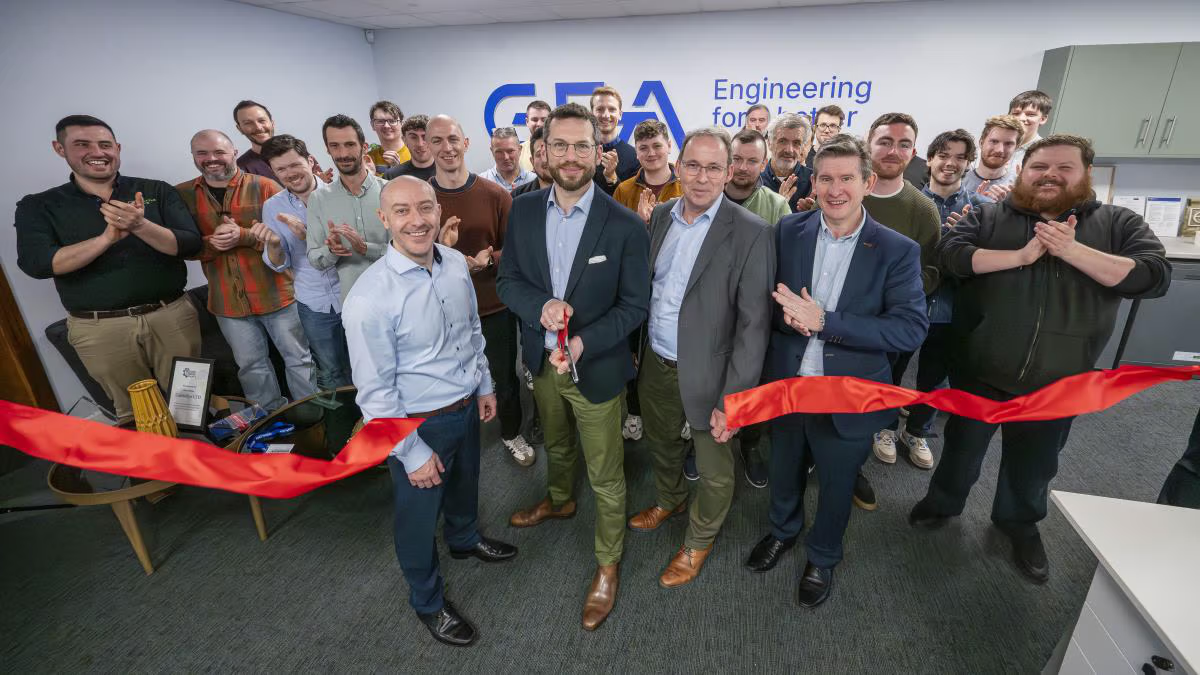
GEA has opened a software development site in Belfast to expand its artificial-intelligence capability in dairy operations, adding 20 research and development roles focused on CattleEye and related products in the company’s DairyNet portfolio. The facility, based at The Innovation Centre in Belfast, is intended to deepen the software and user-experience side of GEA’s digital dairy offering.
The technical focus is herd-level monitoring. GEA says CattleEye is designed to detect and predict lameness in cows and to generate body-condition data, giving farms earlier visibility of welfare and performance changes that can affect milk output, treatment needs, and labour allocation. According to the company, the platform is already in use on more than 140 farms across the UK, Europe, the US, and Australia, monitoring more than 200,000 cattle in 23 countries.
The Belfast expansion follows GEA’s acquisition of CattleEye in 2024, and the new team is being built to accelerate integration of that capability into the wider DairyNet environment. The new hires are expected to focus on software engineering and user experience, with GEA saying the work will improve both efficiency and the user experience of the DairyNet app.
There is also a regional industrial angle. Invest Northern Ireland is supporting the project through research and development funding, with backing that includes the UK Government Shared Prosperity Fund. For GEA, the move creates a development base in a region with a strong dairy heritage and a growing software talent pool.
The company says future development is aimed at helping customers reduce additional equipment investment and animal treatments, while improving efficiency through automated data insights and reducing greenhouse-gas emissions. That keeps the emphasis on operational decision-making at farm level, while also reflecting a wider shift in dairy production, where upstream data increasingly shapes the consistency, efficiency, and economics of the processing chain that follows.
GEA is already established in food and beverage manufacturing as a systems supplier. The Belfast expansion shows that the digital side of dairy is becoming more tightly engineered, more specialised, and more central to how production performance is managed before milk reaches the processing plant.