IN Brief:
- Handtmann demonstrated an integrated minced meat line at PACK EXPO on 18 October.
- The concept connects precise portion production with downstream vacuum packaging through partner equipment.
- A trade-show demonstration does not establish a commissioned customer installation or independently verified throughput.
Handtmann has demonstrated an integrated minced meat production arrangement combining its processing equipment with machinery supplied by partners to deliver accurate portions into vacuum-sealed packs. The presentation was reported from PACK EXPO on 18 October and shows the company’s approach to connecting meat preparation, portioning and downstream packaging in one process. It is an equipment demonstration, not an announcement that a named meat processor has installed the configuration or that a new factory has started production.
The exhibited process links the delivery of formed minced meat portions to vacuum packaging machinery through equipment from Handtmann and its partners. Portions need to enter the downstream section at a controlled interval, weight and orientation, since irregular arrival can interrupt the packaging cycle even when the individual machines are capable of higher speeds. Synchronising the handover also affects how much product must be held between the portioning and packing stages. The available demonstration establishes the integration concept but does not specify the line’s control architecture, model combinations or measured operating rate.
Minced-meat processing places particular demands on material flow. Product texture and particle definition are influenced by the grinding stage, feed pressure and the way meat is moved through a filler. Handtmann’s existing technology portfolio includes inline grinding and vacuum filling, which allow grinding and portioning to be coordinated rather than treated as separate, manually balanced operations. The October demonstration summary does not identify each model on display, so individual machine capabilities from the wider portfolio should not automatically be assigned to the exhibited line.
Portion-weight control affects both legal pack compliance and product giveaway. Filling equipment must deliver a repeatable quantity despite variation in the meat’s temperature, fat content and texture; a downstream weighing function may be used to detect drift or reject product outside configured limits. Handtmann’s broader automation portfolio includes weighing and sorting functions, but the PACK EXPO account does not identify a checkweigher model or quantify the weight accuracy achieved by the exhibited equipment. No reduction in giveaway or independently validated throughput should therefore be attributed to this demonstration.
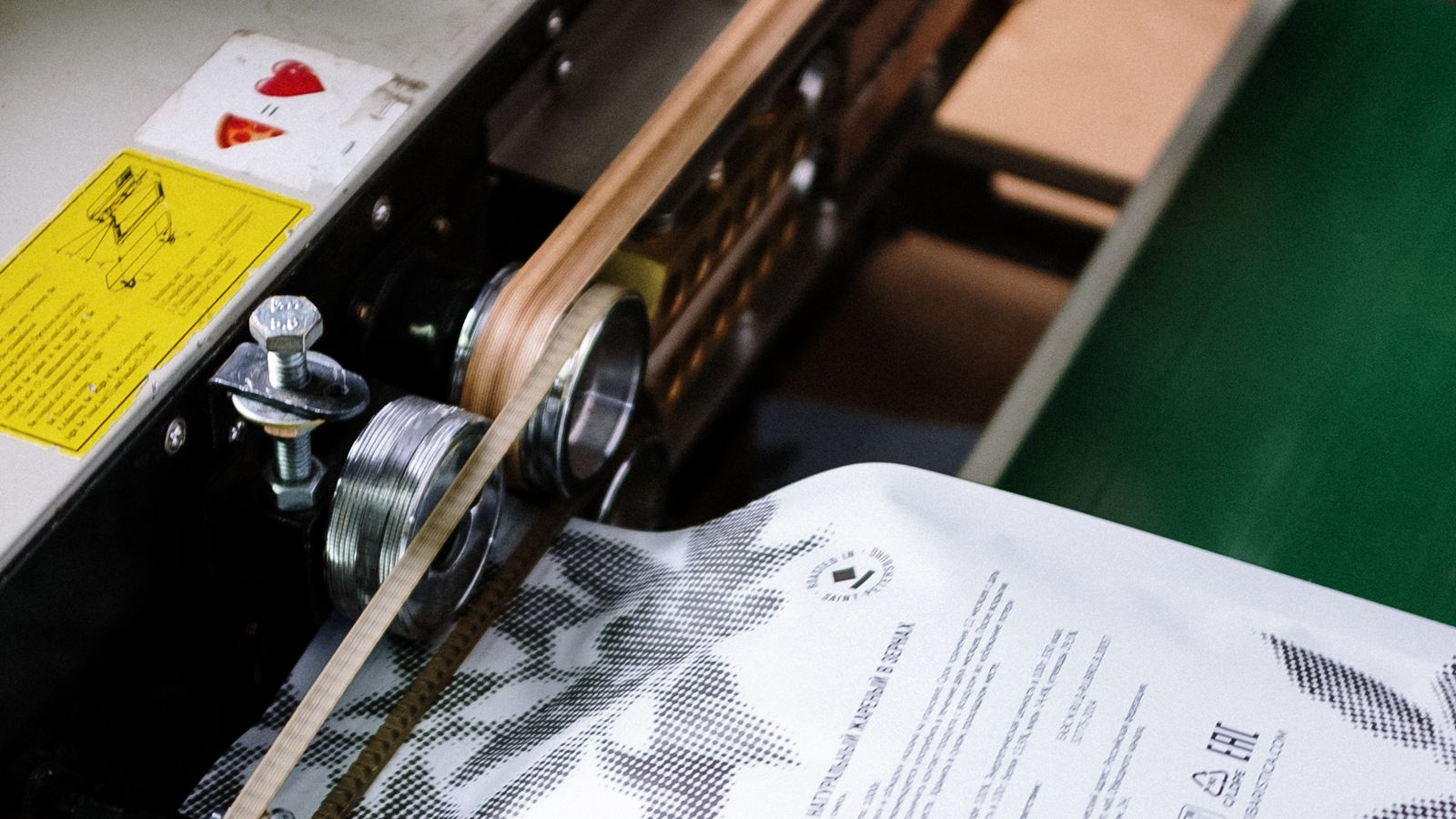
The transfer section has to move portions into the packaging process without disturbing their shape or contaminating the sealing zone. Product position is significant because material caught between sealing surfaces can undermine package integrity. Conveyor timing, depositing mechanisms and stop-start logic must match the packer’s operating cycle, particularly where upstream equipment would otherwise continue delivering portions into an occupied space. The exhibition report provides no verified conveyor specification or pack format, so those integration requirements describe the engineering involved rather than confirmed components of the displayed line.
Vacuum packaging changes the environment around the meat by removing air before the pack is closed, although actual residual oxygen and shelf-life performance depend on the packaging material, seal quality and product conditions. A vacuum-sealed pack is not by itself a guarantee of a particular shelf life or microbial reduction. The demonstrated concept is reported as vacuum packaging, not necessarily modified-atmosphere packaging, and the available account provides no film structure, gas composition, seal integrity test result or validated shelf-life extension. Those distinctions remain important when specifying a commercial installation.
Hygienic integration extends across the whole line. Meat-contact surfaces need accessible cleaning, and any transfer that carries product between machines must avoid creating hard-to-clean gaps or additional manual handling. Mechanical interfaces are only part of the work: electrical signals, interlocks, recipe selection and rejection logic must be coordinated so that a stopped packaging machine does not continue receiving new portions. Handtmann’s wider product materials describe centralised control and modular automation as available approaches, but the exact software and interlock scheme in the October demonstration has not been disclosed.
Performance at a customer plant would depend on trials using its own recipes, meat temperature, grind size, packaging material and intended portion weights. Product stickiness can affect release from conveyors, while tray dimensions, sealing dwell time and cleaning intervals may make the packaging stage the speed limit for the whole system. Any claim of sustained output would need to specify these operating conditions and the proportion of packs meeting weight and seal requirements. The exhibition report contains no such figures and does not identify an operator that has completed commercial acceptance testing.
Handtmann is showing the application at PACK EXPO in Chicago from 18 to 21 October, with the US division listing booth LU-7728. The presentation demonstrates how portions can pass from processing machinery into a partner’s vacuum packaging stage, but provides no machine-by-machine specification, cycle rate, quantified waste saving or customer installation reference. Engineering assessment of a production installation would require those details alongside cleaning validation and pack integrity testing. The development reported on 18 October is the integrated equipment demonstration, with its commercial performance still unreported.