IN Brief:
- International Paper's board approved the proposed separation of its EMEA packaging operations on 22 November.
- The company expects to distribute approximately 80.1% of DS Smith's shares on 7 December, subject to conditions.
- DS Smith will operate as a separately listed European packaging group, with approximately €8 billion in revenue and operations across 29 countries.
International Paper has approved the separation of its Europe, Middle East, and Africa packaging operations into a new publicly traded company, DS Smith plc, with completion expected on 7 December 2026. The board took the decision on 22 November, advancing a restructuring that will establish two separately listed packaging businesses with distinct geographical operations.
Approximately 80.1% of DS Smith’s ordinary shares are expected to be distributed to eligible International Paper shareholders and depositary interest holders. International Paper will retain a stake of approximately 19.9%, maintaining a financial interest in the European business after its separation.
DS Smith’s ordinary shares are expected to trade on the London Stock Exchange, while an American depositary receipt programme will provide a New York Stock Exchange listing. Both are expected to use the trading symbol SMDS.
Completion remains conditional. International Paper has identified outstanding requirements including the effectiveness of a US registration statement and publication of a prospectus approved by the UK’s Financial Conduct Authority. The proposed distribution date therefore represents the company’s current timetable rather than a completed transaction.
The shareholder record date has been set for 3 December. Under the expected distribution ratios, holders of International Paper common stock will receive 0.36 DS Smith American depositary shares for each International Paper share. Every depositary share will represent five DS Smith ordinary shares.
Holders of International Paper depositary interests are expected to receive 1.80 DS Smith ordinary shares for each interest held. Cash will be paid instead of fractional share entitlements, with the definitive ratios to be announced after the record date.
International Paper also intends to cancel its London listing following completion of the separation. The delisting is expected to take effect on 22 December, leaving 21 December as the final trading day for its shares in London. The company’s common stock will continue trading on the New York Stock Exchange.
The restructuring follows International Paper’s acquisition of DS Smith in January 2025. That combination brought together substantial North American and European corrugated packaging operations, but International Paper subsequently decided to establish separately managed businesses with different regional priorities.
The planned independent DS Smith will combine the principal EMEA packaging activities of the two legacy companies. International Paper’s North American operation will retain businesses originating from both groups in that region.
DS Smith has outlined an operating platform generating approximately €8 billion in annual revenue, serving customers across 29 countries. Its business includes paper manufacturing and corrugated packaging conversion, supplying customers in food and beverage production, consumer goods, retail distribution, and other industrial sectors.
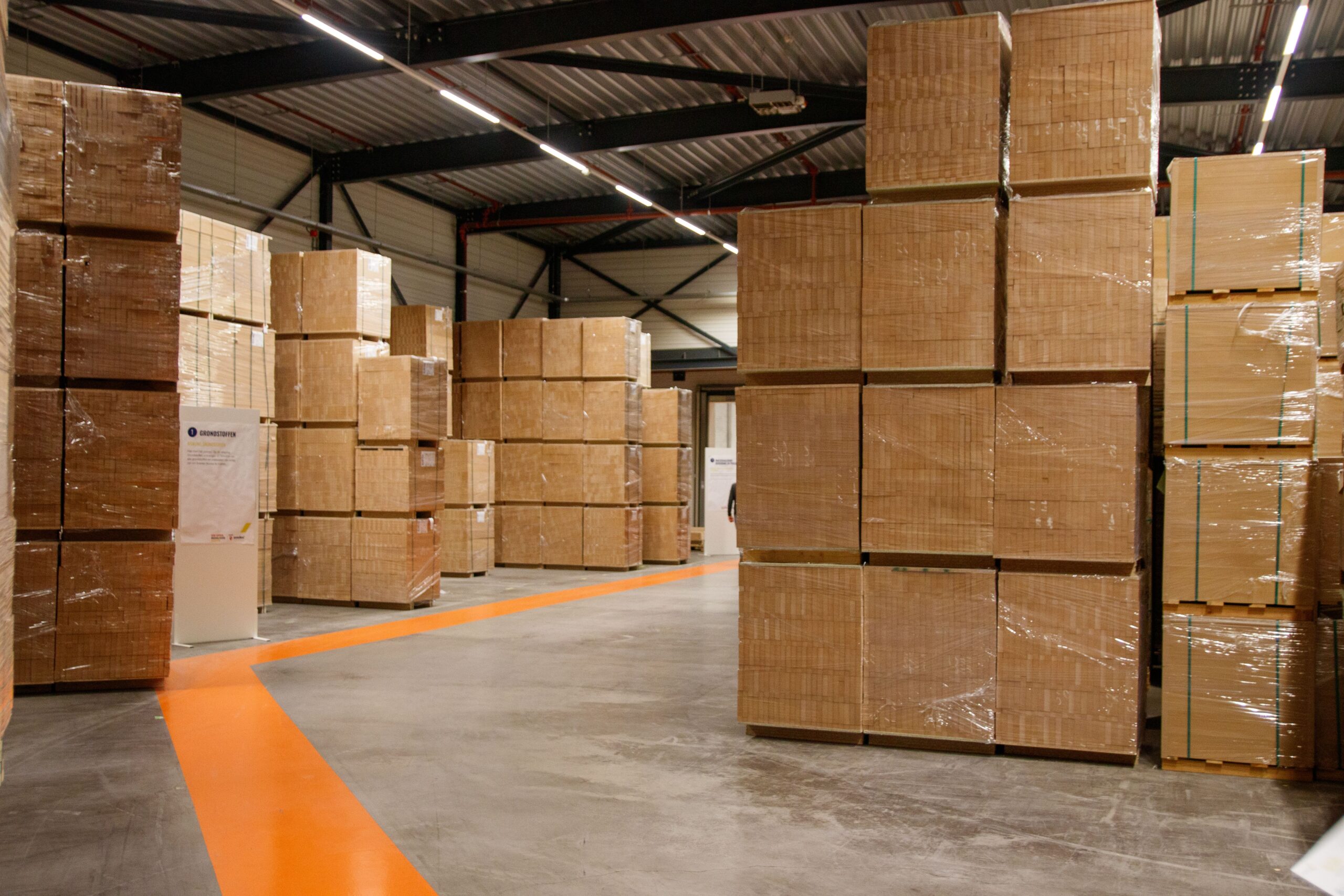
Corrugated packaging manufacture involves several closely connected production stages. Containerboard is produced using suitable fibre inputs, before corrugators combine fluted and flat paper layers into sheets. Converting equipment then prints, cuts, scores, folds, and glues those sheets into packaging formats designed around customer requirements.
The performance of a completed case depends on the properties of the materials and the way they are converted. Board strength, flute configuration, moisture exposure, and adhesive performance influence how a package behaves during filling, palletisation, storage, and transport.
Food and beverage manufacturers also require packaging dimensions and construction tolerances that remain compatible with their packing machinery. Case erectors, robotic packers, palletisers, and other handling equipment can be sensitive to changes in board stiffness, scoring accuracy, and the geometry of finished packaging.
An independent DS Smith will therefore inherit an established industrial network whose operational performance depends on coordination between paper mills, converting sites, and customers. The separation does not itself alter packaging specifications or production processes, but places decisions about future capital allocation and regional investment within a new corporate structure.
Paper mills and packaging converters have different operating constraints. Mills are capital-intensive assets whose economics depend on output, energy consumption, fibre supply, maintenance, and utilisation. Converters must accommodate varied packaging formats, print requirements, and production schedules, often across shorter customer order cycles.
Balancing those requirements is particularly important when a group supplies manufacturers operating several factories or distribution centres. Consistent material specifications can simplify purchasing and machine settings, while regional converting capacity affects lead times and the ability to respond to changes in production demand.
The European packaging industry is also adapting to new requirements governing recyclability and material use. Those obligations affect the design of packages, the selection of fibre grades, and decisions about whether particular applications can move from plastic-based structures towards paper and board.
Material substitution remains a technical decision. Corrugated packaging is well established in secondary and transit applications, but moisture resistance, mechanical protection, product safety, and the conditions of distribution determine whether a proposed design is suitable.
DS Smith has previously outlined investment in manufacturing efficiency and lightweight packaging capabilities. Its future management will have to allocate capital between mills, converting equipment, maintenance, and product development while meeting the commercial requirements of customers across different European markets.
The company has also disclosed a programme of operating cost reductions and changes to its production network during preparations for the separation. Those measures predate the board’s November approval and should not be confused with new restructuring decisions announced on 23 November.
International Paper has identified the geographic separation as part of its broader corporate strategy. The company intends to concentrate its remaining operations on North America, while DS Smith will be responsible for the development of its EMEA packaging business.
The next scheduled milestone is the 3 December shareholder record date, followed by the proposed distribution on 7 December. Subject to the remaining approvals, DS Smith will begin trading independently in London and New York, while International Paper will retain its minority shareholding and proceed with its planned London delisting.