IN Brief:
- Ishida will demonstrate its Inspira iTPS integrated snack packing system at Gulfood Manufacturing.
- The stand also covers CCW-AS weighing, QX-500 tray sealing, X-ray, metal detection, and checkweighing.
- Sentinel 5.0 will demonstrate how equipment and production data can be consolidated into a common monitoring layer.
Ishida Europe will demonstrate an integrated food packing line at Gulfood Manufacturing 2026, combining weighing, bagmaking, seal testing, inspection, and production monitoring to show how separate machines can be operated as a coordinated system.
The exhibition takes place from 3 to 5 November at Dubai World Trade Centre, with Ishida exhibiting on Stand C3-4 in Hall 3. Its display will span snack packing, frozen-food weighing, tray sealing, X-ray inspection, checkweighing, metal detection, and plant-performance monitoring.
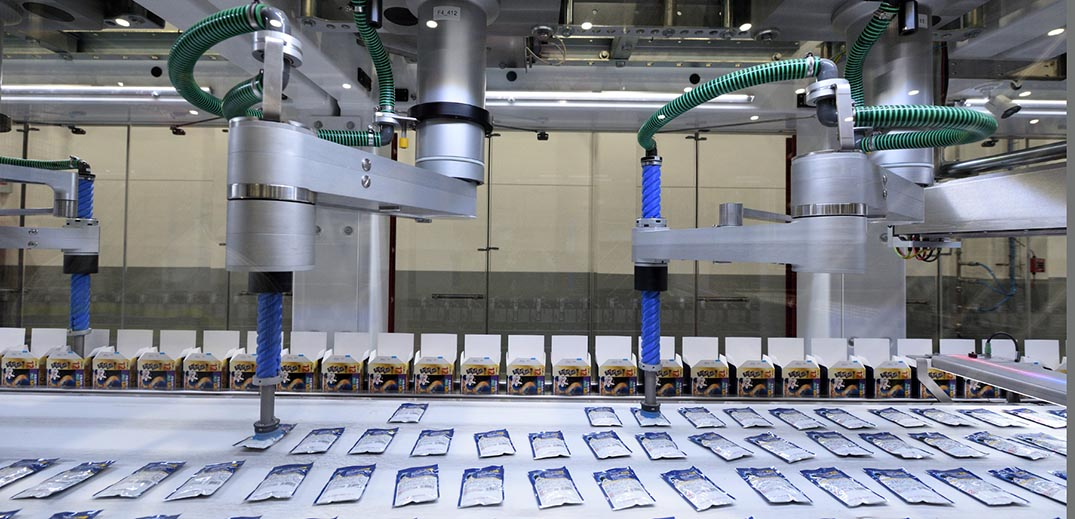
The central demonstration will use Ishida’s Inspira iTPS snack food packing system, which combines multihead weighing, bagmaking, and seal testing. Integrating those operations gives the controls an opportunity to respond across the line rather than leaving each machine to optimise its own process in isolation.
That matters on high-speed snack lines because the performance of one machine is constrained by the equipment around it. A bagmaker capable of high speeds creates little additional output if the upstream weigher cannot supply consistent portions, while accurate dosing adds little value if defective seals create rejects downstream.
Better integration can also expose losses that would otherwise be treated as unrelated production problems. Weight giveaway, film stoppages, seal failures, and reduced bagmaker speed may have different immediate causes, but together they determine how much saleable product leaves the line during a shift.
Ishida will also display a CCW-AS multihead weigher configured for frozen food applications. The machine is part of a range developed for controlled portioning across different products, with the familiar industrial objective of combining high throughput with sufficiently accurate weights to avoid accumulating unnecessary giveaway.
That accumulation becomes expensive quickly. A few excess grams in an individual pack may appear insignificant, but repeated across hundreds of thousands of packs the product given away above declared weight becomes a measurable production cost.
The QX-500 tray sealer adds another packaging format to the stand. Ishida is positioning the machine around compact installation, rapid tooling changes, flexibility across tray and film combinations, and operation without compressed air.
Those features are relevant where one tray-packing area handles several products or pack sizes. Changeovers are often where nominal line speeds lose much of their commercial value, because a machine capable of high output while running may still deliver poor utilisation if tooling, cleaning, film changes, and restart checks keep it idle between production campaigns.
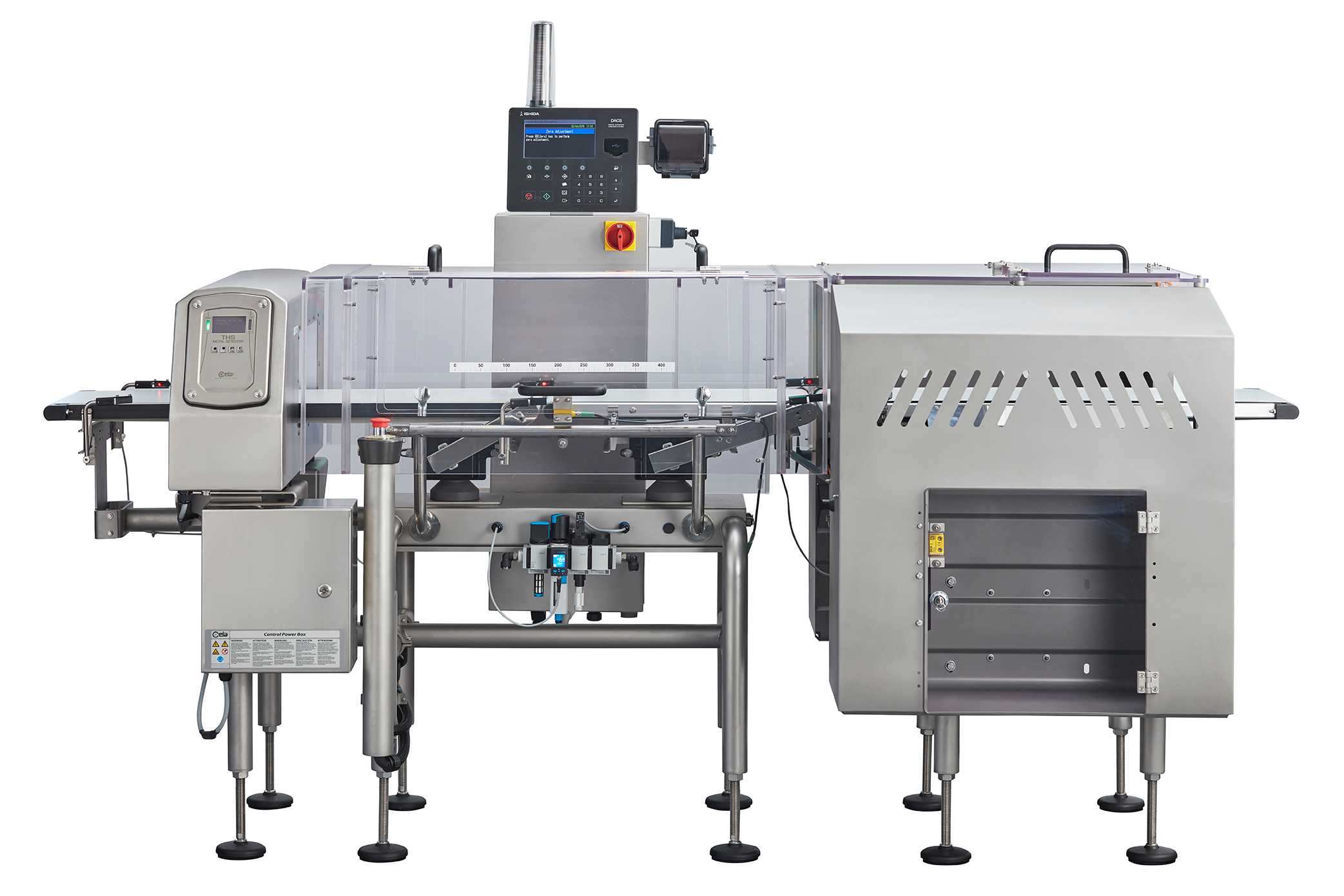
Inspection will be represented by the IX-PD X-ray platform alongside a DACS-GN-SE checkweigher integrated with a CEIA metal detector. The systems address different parts of finished-pack control, including contaminant detection and weight compliance.
X-ray inspection can detect certain dense foreign materials that are outside the capability of conventional metal detection, while metal detectors remain widely used across food plants because they suit a broad range of products and are well established within validation and verification programmes.
Checkweighing adds another function by confirming pack weight and providing production feedback where trends suggest filling or portioning is drifting. Used effectively, the data can identify an upstream issue before large volumes of product move outside the intended weight range.
Ishida’s Sentinel 5.0 monitoring software provides the data layer connecting the wider display. The system consolidates machine information into a common dashboard and can communicate with both Ishida and non-Ishida equipment, allowing production teams to examine line performance rather than monitor each machine through a separate interface.
That interoperability is more useful than a closed monitoring platform in most established food factories. Plants accumulate equipment over many years, often from several suppliers, and few manufacturers will replace a serviceable line merely to obtain a uniform software environment.
Sentinel 5.0 itself is not new to Gulfood. Ishida unveiled the current generation of the system at the 2024 edition of the exhibition, while the QX-500, inspection systems, and other equipment in the 2026 display are also established technologies rather than launches created specifically for this year’s show.
The 2026 news angle is consequently integration rather than novelty. Ishida is using the exhibition to demonstrate how weighing, primary packaging, inspection, and monitoring can be combined around common production objectives including throughput, giveaway, quality, and equipment effectiveness.
Steve Jones, marketing director of Ishida Europe, said: “Across the industry, businesses are under increasing pressure to enhance productivity, reduce costs and maintain the highest levels of product quality and compliance.”
Those pressures are particularly relevant where producers add automation gradually. Installing a faster weigher or sealer can improve one process, but the investment may simply reveal another constraint unless conveyors, inspection, packing, data systems, and operators are considered as part of the same production flow.
The Dubai exhibition gives Ishida an opportunity to demonstrate that approach to Middle Eastern manufacturers investing in higher levels of food-processing and packaging automation. Actual factories will provide a less forgiving test than the stand: dust, product variation, cleaning, format changes, ageing equipment, and mixed supplier systems tend to make integration considerably more interesting.
For visitors, the useful questions will therefore concern changeovers, sanitation, recovery from faults, data ownership, connectivity to existing machinery, and the amount of engineering required to make each component exchange meaningful information with the rest of the line.
The individual machines on Ishida’s stand are established pieces of food-production hardware. The more consequential proposition is whether they can behave as one line rather than several capable machines occupying the same factory floor — a distinction that tends to become obvious only when production stops.