IN Brief:
- Greencore says it has donated more than one million meals in the past year through the Coronation Food Project.
- The Warrington visit highlighted surplus ingredient recovery, inter-site capacity sharing, and additional meal production during quieter periods.
- The project points to a more formal manufacturing model for turning spare capacity and surplus resources into redistributed food.
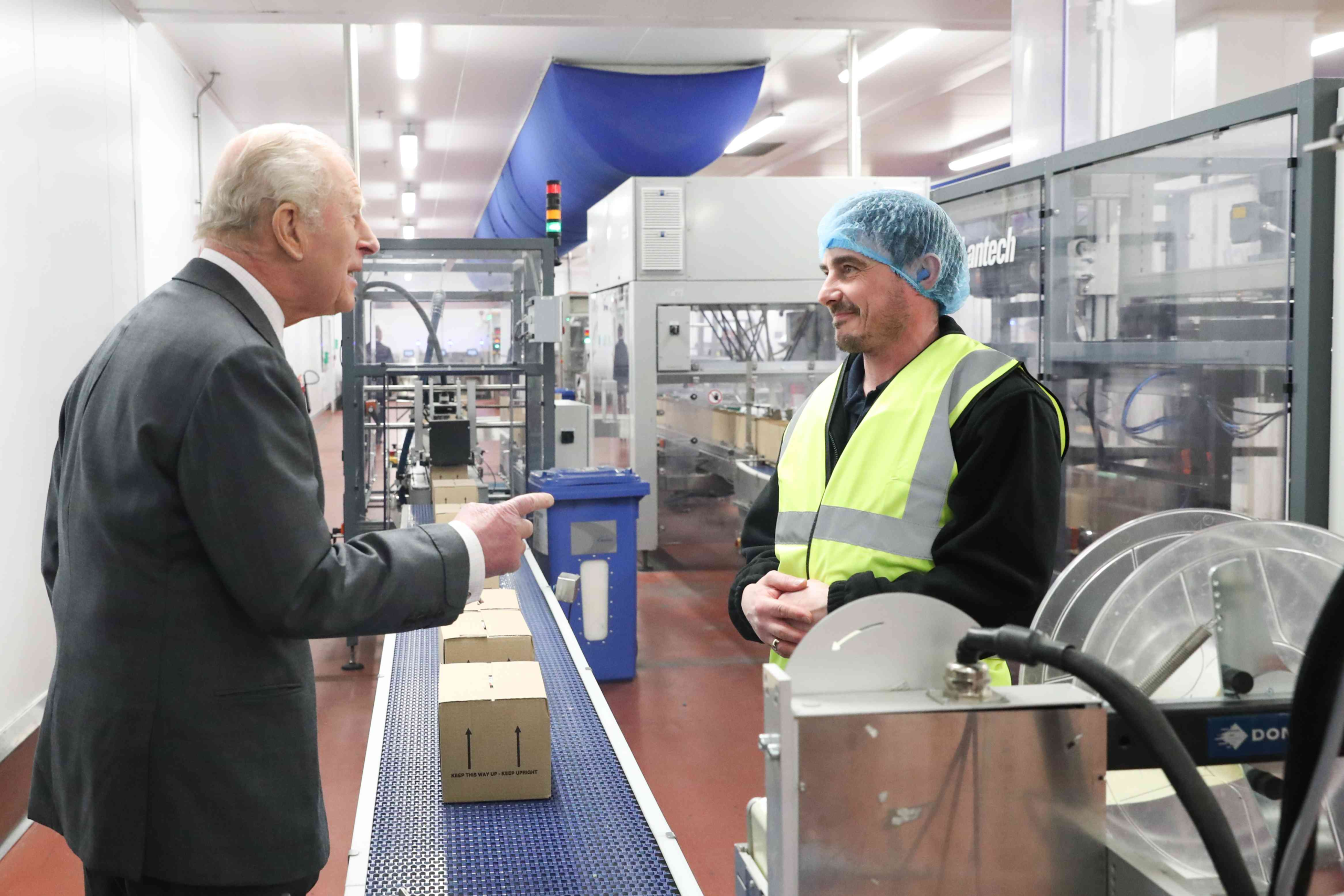
King Charles visited Greencore’s Warrington manufacturing site on 16 March to see how the company is using production planning, surplus ingredient recovery, and redistribution partnerships to reduce waste across its operations.
The visit focused on Greencore’s work within the Coronation Food Project, launched in November 2023 to reduce food waste and support food redistribution. Greencore said it has donated more than one million fresh meals over the past year, working with Sainsbury’s and redistribution partners FareShare and The Felix Project.
At plant level, the model centres on what can be done with spare capacity and surplus materials that remain usable but would otherwise fall out of the supply chain. Greencore said it has been able to move production between sites during quieter seasonal periods, creating manufacturing headroom that can be redirected into meal production. Surplus ingredients can then be brought into an additional production stream rather than discarded.
That approach pushes redistribution further upstream into factory planning. Instead of relying solely on end-of-line surplus or short-dated finished stock, processors can use available labour, packaging, line time, ingredients, and logistics capacity to produce extra volume when the network allows. The result is a more structured operating model for converting imbalance in the system into finished meals.
Alliance Food Sourcing, convened by IGD with partners including FareShare and The Felix Project, is intended to give that model broader industrial shape. The programme is designed to pool underused resources across the supply chain, including food, packaging, labour hours, and factory or distribution capacity, in order to manufacture products for redistribution in more predictable volumes.
During the visit, the King also met engineering apprentices at the Warrington site, linking the site tour to the workforce and technical capability needed to run increasingly flexible food manufacturing operations. Greencore said the meals produced for redistribution are made to the same quality and nutrition standards as products supplied through mainstream retail channels.
Dalton Philips, chief executive of Greencore Group, said: “It was a privilege to welcome The King and to showcase the innovation happening across Greencore. From pioneering new ways to reduce food waste to developing the highly skilled engineers of the future, our teams are proving just how dynamic and forward-thinking the food industry can be.”
He added: “Reaching one million donated meals is an important milestone – and one we are committed to building on as we continue to support communities and push for a more sustainable food system.”
The wider Coronation Food Project has already moved beyond a symbolic scale, with participating organisations working to connect rescued surplus, redistribution networks, and manufacturing capacity more directly. For large food producers, that points to a more formal route for embedding waste reduction into routine production planning rather than treating redistribution as an occasional response to surplus.