IN Brief:
- NIRAS has helped translate Myco4Food’s solid-state fermentation concept into an engineering design for larger-scale applications.
- Previous design work covered reactor dimensions, component selection, heating, cooling, ventilation and pilot manufacturing drawings.
- The collaboration remains a technology development and scale-up effort, not an announced operating commercial factory.
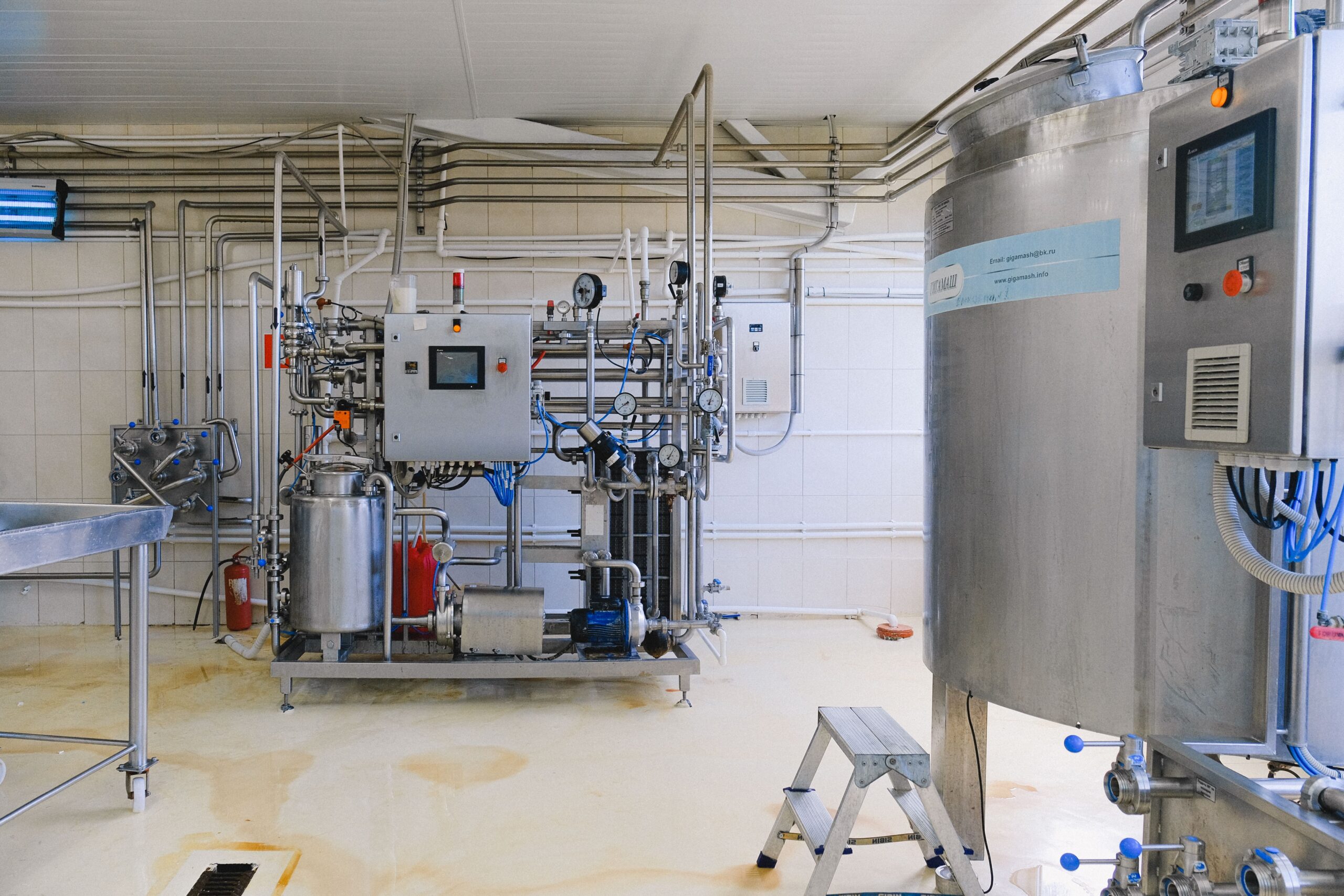
NIRAS has advanced the design of a solid-state fermentation bioreactor with Myco4Food, moving the technology company’s concept towards equipment suitable for larger-scale applications. The latest work follows an earlier prototype assessment and engineering programme covering pilot reactor dimensions, mechanical components and utility systems. The Danish consultancy describes the new design as another step towards industrial implementation; neither partner has announced an operating commercial installation.
Myco4Food is developing solid-state fermentation equipment for producing food ingredients and other bio-based materials. In this type of process, microorganisms grow on a moist solid substrate rather than in a freely flowing liquid broth. The material and the organisms must be maintained within suitable limits for temperature, moisture and gas exchange, even though conventional liquid mixing and cooling methods may be unsuitable. Translating a successful small-scale reaction into productive machinery therefore requires control of both the biological process and the physical behaviour of the material bed.
The collaboration began with NIRAS evaluating Myco4Food’s first prototype reactor in an earlier engineering assignment. In August, the consultancy described work to determine the next reactor’s dimensions and select heating, cooling and ventilation components. It also prepared engineering drawings intended to support manufacture of a pilot-scale system and helped identify a potential manufacturer. The November work builds on that programme by developing a concept intended to address larger-scale requirements, without reporting that the full industrial reactor has been built.
Temperature management is a particularly important constraint in solid-state systems. Microbial metabolism generates heat, while the material bed may have limited ability to redistribute that heat compared with a pumped liquid. As reactor dimensions increase, the relationship between internal heat production and available heat transfer surface can change substantially. Control therefore depends on the geometry of the vessel, the way air is introduced and removed, and the characteristics of the substrate. NIRAS has confirmed work on heating, cooling and ventilation selection but has not published the final design calculations or operating temperature range.
Ventilation brings a second set of engineering considerations. Air movement can supply oxygen, remove carbon dioxide and influence moisture loss, but uneven distribution may produce different conditions within the same bed of material. Excessive drying can change local water availability, while insufficient airflow may limit the performance of organisms in oxygen-dependent processes. The appropriate balance depends on the intended organism, feedstock, particle size and process cycle. The company has not identified a specific commercial organism or substrate formulation for the new reactor.
The material itself presents another design constraint. Moist particles may compact, create preferential air channels or resist discharge as their structure and moisture content change. The equipment has to accommodate loading and unloading while preserving access for process air and allowing effective cleaning between batches. Contamination control is especially important when the intended product is a food ingredient. NIRAS has described its component and systems engineering work, but has not specified whether the Myco4Food reactor will use mixing mechanisms, trays, an agitated bed or another internal arrangement.
Designing for production capacity requires a balance between the volume processed per cycle and the conditions that support consistent biological activity. Simply enlarging a successful small reactor can change residence times, temperature gradients and the predictability of the product. An industrial design may instead require multiple modules, altered vessel geometry or new control strategies. NIRAS has not published a chosen commercial configuration, proposed annual capacity, reactor volume or investment budget for Myco4Food’s project. Claims about eventual productivity improvements would therefore be premature.
The combined work has produced prototype recommendations, pilot manufacturing drawings and a more advanced concept for scaling the system. That sequence is important because specifying a workable geometry and selecting utilities are prerequisites for testing a reproducible process at larger loads. It is nonetheless distinct from running a validated commercial fermenter: NIRAS and Myco4Food have not disclosed a factory order, installation date or independently measured throughput.
Product recovery must also be considered when fermentation is scaled. Some processes require biomass or a target ingredient to be separated from the original solid substrate, while others may use the fermented material more directly; the approach changes equipment needs and operating economics. Substrate preparation, batch duration, cleaning and batch-to-batch consistency all affect capacity calculations. The collaborators have not reported commercial yields or a validated cost per kilogram, so those parameters remain open beyond the reactor design milestone.
NIRAS has helped Myco4Food establish an engineered route from prototype evaluation to pilot manufacture and a larger-scale concept. The project now depends on operating evidence: how consistently a reactor controls temperature, airflow and moisture at its intended loading, and whether the resulting ingredient meets a repeatable specification. No commercial commissioning date, annual processing capacity or factory order has been disclosed. The reported advance is the engineering design itself, with industrial operating performance still to be demonstrated.