IN Brief:
- PowderGel 6800 can replace conventional cake gel in powder form or after mixing with water.
- Palsgaard specifies a 25:75 powder-to-water reconstitution method and 0.1–0.9% batter dosage.
- The supplier claims easier dosing, stable aeration and reduced movement of water through the supply chain.
Palsgaard has introduced PowderGel 6800, a powdered whipping emulsifier intended to substitute for conventional paste or gel systems in industrial cake production. The Danish ingredients company says manufacturers can add the product directly as a powder or mix it with water to reproduce the handling characteristics of a traditional cake gel. The development addresses the handling of a functional ingredient that has a relatively small inclusion rate but a significant influence on batter aeration, cake volume and finished crumb texture.
In cake mixing, emulsifiers help stabilise the interface between air, water and fat as mechanical action incorporates bubbles into the batter. The distribution and stability of those bubbles affect specific gravity before baking and the structure that develops as the cake sets in the oven. Changes in emulsifier dispersion, mixing time or ingredient temperature can contribute to variability in final height and texture. Conventional ready-to-use cake gels simplify that task but introduce sticky materials and packaging residue into factory operations.
PowderGel 6800 is designed to separate the active ingredient from much of the water traditionally shipped with a ready-made gel. Palsgaard’s product information specifies a reconstitution recipe of 25% PowderGel 6800 and 75% tap water, with no heating needed, and states that the resulting gel can substitute one-for-one for an existing cake gel in a recipe. The supplier also describes direct powder use where the bakery’s batching and mixing arrangements permit it. Its recommended powder dosage is 0.1–0.9% of total cake batter.
The listed formulation includes polyglycerol esters of fatty acids, designated E475, with polysorbate 80, or E433, used as a dispersing agent and silicon dioxide, E551, as an anti-caking agent. The manufacturer’s technical information describes the material as free from mono-propylene glycol, non-GMO and allergen-free, with kosher and halal certification and a 12-month shelf life. Those specifications will still need to be evaluated against the labelling, allergen-management and procurement requirements of each customer’s finished products.
Palsgaard says the new material can produce equivalent volume, fine crumb structure and mouthfeel to conventional cake gels while stabilising batter specific gravity throughout production. It also claims the powder form simplifies dosing and avoids gel left on the sides of storage containers. These are supplier-reported performance characteristics; the announcement does not include independently published head-to-head production trial datasets, wastage measurements or quantified energy savings across different cake recipes.
The format changes the engineering considerations of ingredient delivery. A plant using direct powder dosing may need to verify metering accuracy, powder dispersion and dust control, whereas a site making a gel on demand must control the powder-to-water ratio, mixing order and batch repeatability. Neither method automatically removes the need to validate batter density, deposits, oven response and finished-product texture. Palsgaard says the product can be introduced without major reformulation or process changes, but individual production-line verification remains prudent where recipes and mixing equipment differ.
The claimed logistics benefit follows from not transporting and warehousing a formulation made mostly of water. A concentrated dry product can lower pallet demand and handling mass per equivalent quantity of prepared gel, while Palsgaard says recyclable cartons can replace plastic gel containers. Actual savings will depend on material density, pack size, local shipping distances, preparation losses and how factories organise storage. Water use also shifts to the point of production if the powdered ingredient is reconstituted there.
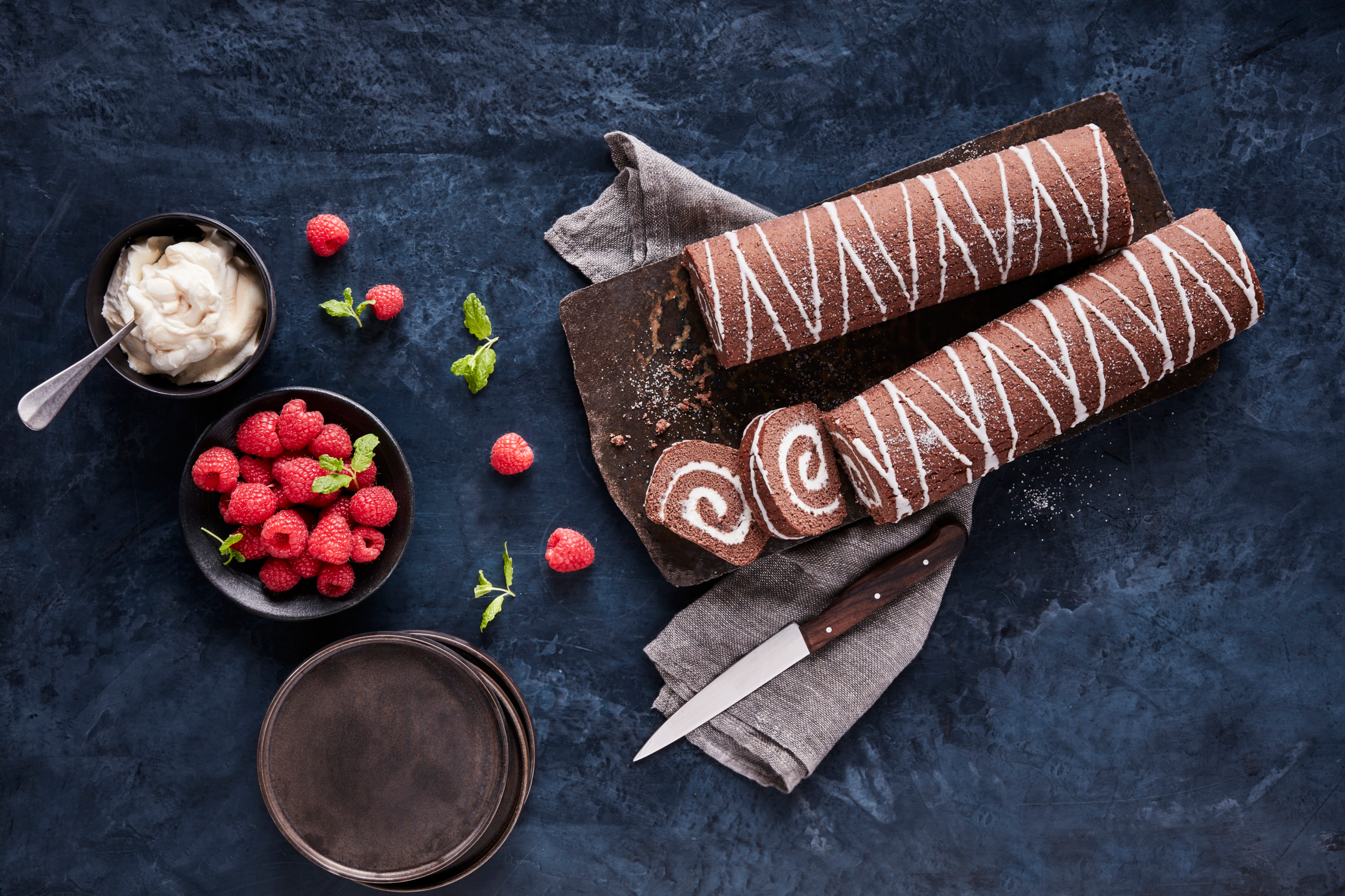
The supplier lists layer cakes, Swiss rolls, sponge cakes, pound cakes, cupcakes and high-ratio cakes among the applications. Their formulations differ markedly in fat, sugar and water levels, which affect foam stability and the way emulsifiers perform during mixing and baking. A single replacement ingredient therefore has to operate across processes with different deposit weights, line speeds and final product structures. The claimed consistency advantage will be most persuasive where producers can repeat it at industrial throughput rather than in a demonstration kitchen.
A useful industrial comparison would track powder-feed accuracy, mixing order and batter specific gravity at both the beginning and end of each production run. Reject quantities, container residues and packaging mass per prepared batch could then be compared with the bakery’s existing cake gel process. Palsgaard reports favourable results from its trials against three market cake gels, although publicly available product information does not provide a complete independent dataset for measuring the benefits across different factory lines.
Palsgaard’s Senior Innovation Specialist Christophe Lequet links the product to demands for lower manufacturing costs and reduced environmental impact. The company plans to demonstrate PowderGel 6800 at Gulfood Manufacturing in Dubai on 3–5 November 2026, where industrial bakers will be able to examine the concentrated format and discuss potential trials under their own processing conditions.