IN Brief:
- Puratos has inaugurated a new factory in Tunari, Ilfov County, following investment of more than €15 million.
- The approximately 5,000m² production and utilities building increases reported production capacity by about 50%.
- The development includes finished product storage for approximately 2,600 pallets and two additional palletising cobots.
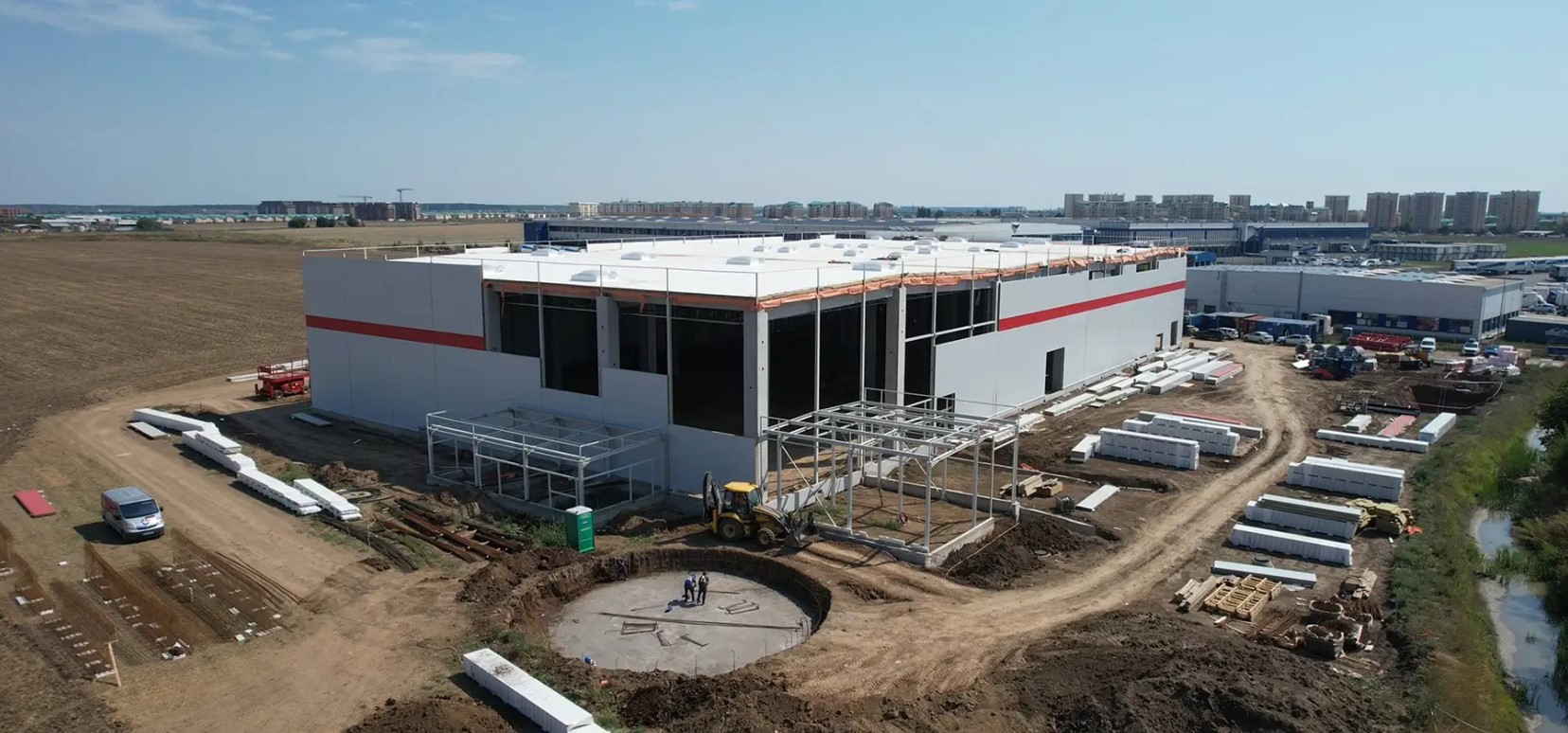
Puratos has inaugurated a new food ingredients factory in Tunari, near Bucharest, following investment of more than €15 million as the Belgian group increases production capacity and strengthens its supply of bakery, pastry and confectionery ingredients across Central and Eastern Europe. The company says the development raises local production capacity by approximately 50% and represents its largest investment in Romania during 30 years of operations in the country.
The new production and utilities buildings occupy approximately 5,000 square metres on an 11,760-square-metre plot alongside the existing Puratos operation in Tunari, Ilfov County. The additional space supports the company’s plan to supply bakery, pastry and confectionery customers in Romania and neighbouring markets. Placing new manufacturing capacity next to an established site also allows the business to organise materials receipt, technical support and dispatch around an existing local operation, although the company has not published how production will be divided between the two plants.
The finished goods warehouse occupies around 1,350 square metres and is designed to hold approximately 2,600 pallets. Refrigerated and frozen areas have also been provided for fruit and other raw materials, linking the ingredient production expansion to a more specialised storage operation. Keeping temperature-controlled ingredients separate from ambient products supports different receiving and holding requirements within the same site. Puratos has not disclosed the refrigeration duty or energy demand of the new storage areas.
Fruit fillings are an important part of the expansion, and their raw material requirements differ substantially from those of dry bakery mixes. Fruit condition and storage temperature affect when deliveries can enter processing, particularly when seasonal supplies have to be held before use. Dedicated refrigerated and frozen areas therefore sit alongside the larger finished goods warehouse rather than being treated as an interchangeable storage pool. The new storage arrangement supports a wider range of material handling requirements, but product-specific holding temperatures and shelf-life specifications have not been disclosed.
Two additional collaborative robots now handle palletising at the end of production, where packed ingredients are prepared for transfer into storage or dispatch. Automated stacking can maintain a consistent handling sequence as packing volumes increase, provided the upstream line and pallet supply keep pace. Puratos has not released an individual throughput figure for the new robots or a measured labour saving, so the reported contribution is additional handling capacity rather than a quantified productivity improvement.
The Romanian business is being developed as a regional base for fruit fillings and ready-to-use creams. In industrial bakery production, the critical properties of these ingredients include consistency during pumping and depositing, behaviour during baking or chilling, and stability after packing. A filling that flows reliably through a depositor must also remain in place inside the finished product, making water management and recipe control central to manufacturing. Puratos has added plant and storage capacity for this work without announcing a particular new commercial formulation as part of the opening.
The company has identified opportunities to source more fruit locally, including projects involving apples from the Vrancea area of Romania. A local supply route could reduce the distance between some agricultural suppliers and the ingredient factory, though actual benefits would depend on seasonal availability, grading, quality assurance, contracts and processing yields. Puratos has not quantified the amount of Romanian fruit it expects to purchase or the proportion of factory inputs that will come from domestic agriculture.
The company is also using its Romanian Innovation Hub to develop reduced-sugar recipes, ingredients based on fermentation and formulations using more local raw materials. Turning an ingredient developed at trial scale into production material requires repeatable mixing, heating, filling and quality checks at the throughput demanded by customers. Additional factory capacity can support that transfer, particularly where a trial product requires different preparation or storage conditions from established recipes. Puratos has not specified which of the hub’s projects will move first into routine manufacture.
Puratos serves more than 2,000 active customers in Romania and employs more than 150 people across manufacturing, development, sales and support. The company has not announced a new recruitment programme alongside the factory opening, and the reported expansion is framed around equipment, storage and automation rather than additional staffing. A precise staffing figure for the enlarged production site, together with its projected annual output, has not been disclosed.
Puratos reports an approximately 50% rise in Romanian production capacity, but it has not set out the additional annual tonnage or the output of individual lines. The enlarged operation combines new ingredient manufacturing space with cold storage, pallet capacity and two further palletising robots. The next measurable indicators will be the utilisation of those facilities and the volumes of fillings and creams supplied to local and regional customers. Those figures will establish how the capital investment changes actual production rather than installed capacity alone.