IN Brief:
- Sidel says Swing Evo cuts water, electricity, and steam use compared with the previous Swing generation.
- The machine pairs counterflow thermal management with PRINCE X predictive control for real-time pasteurisation adjustment.
- A compact footprint, modular build, and tool-free access are intended to simplify integration and maintenance on beverage lines.
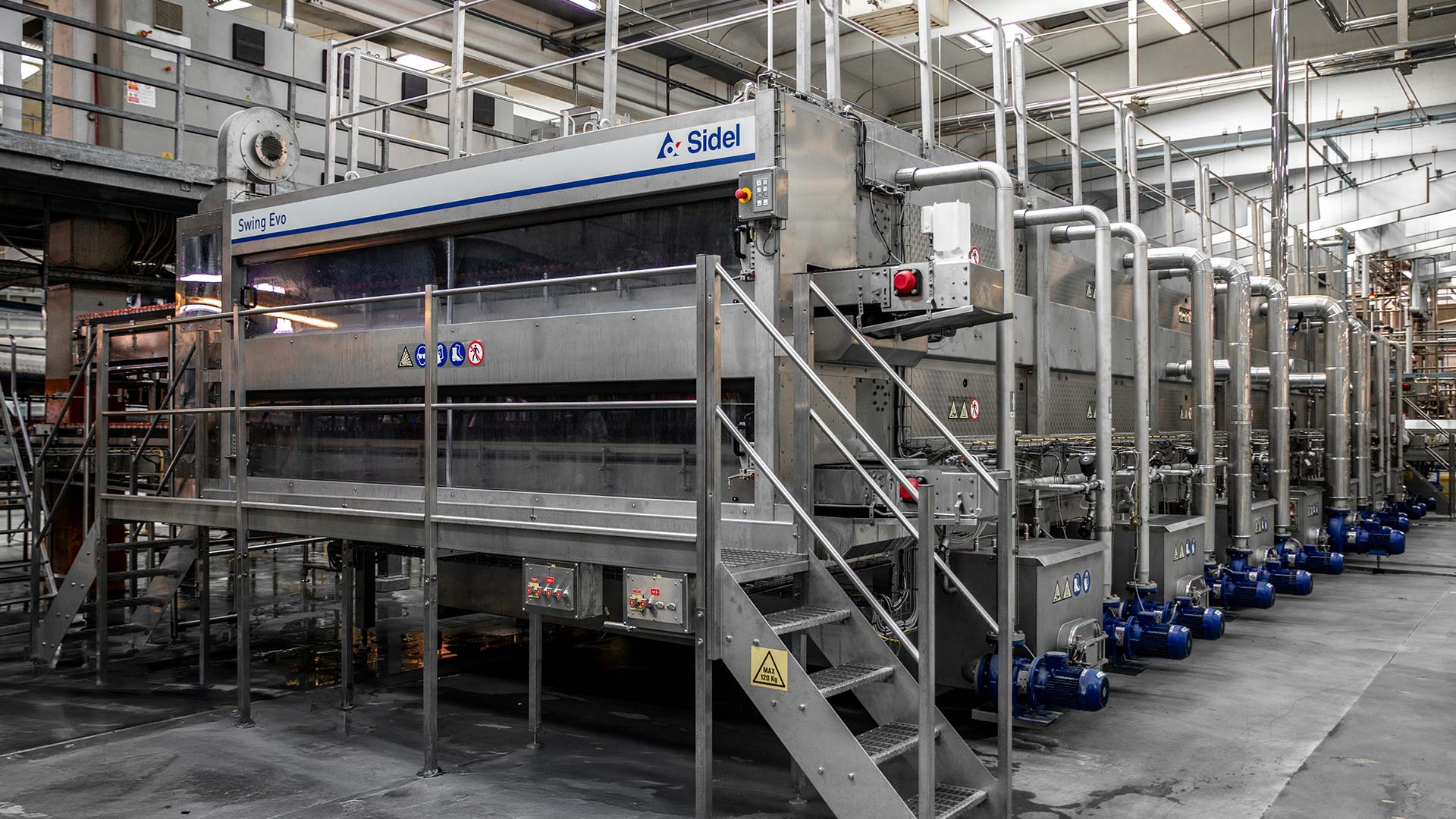
Sidel has launched the Swing Evo tunnel pasteuriser, a modular system for breweries and beverage producers designed to reduce utility consumption without loosening pasteurisation control. The machine uses a counterflow arrangement in which the top and bottom decks run in opposite directions, while each module operates autonomously.
According to Sidel, that configuration allows tighter control of heat exchange and removes unnecessary circulation between tanks. The company says the result is a 10% reduction in water use, a 35% cut in electricity consumption, and a 10% reduction in steam demand compared with the previous Swing generation. In tunnel pasteurisation, where water and energy performance increasingly sit alongside throughput and thermal consistency, those reductions carry practical weight.
Control sits with Sidel’s PRINCE X predictive system, which continuously analyses product temperature evolution and adjusts spray conditions in real time. The system is designed to respond during stoppages and power fluctuations as well as during normal operation, reducing the risk of under- or over-pasteurisation. Sidel also says the machine can handle a wide range of formats and can be run as a standalone cooler where required.
The company has also focused on installation and maintenance. Swing Evo uses a compact, modular layout intended to fit new or existing lines with less disruption to conveyor routing, and Sidel says the first industrial installation, at Refresco’s Sulmona site in Italy, was assembled and commissioned in one week using pre-assembled modules. Sliding side doors, full top access, and tool-free servicing for the spraying system are intended to shorten maintenance interventions and reduce stoppage time on line.