IN Brief:
- EFSA has concluded that Solein is safe under its proposed conditions of use, advancing the ingredient towards EU authorisation.
- Solar Foods produces the protein through gas fermentation using a microorganism supplied with carbon dioxide, hydrogen and nutrients.
- The company is progressing commercial offtake negotiations and financing for Factory 02, with a final investment decision still pending.
Solar Foods has received a positive scientific opinion from the European Food Safety Authority (EFSA) for Solein, its fermentation-derived protein ingredient, completing a significant stage in the company's European novel food authorisation process.
EFSA concluded that Solein is safe under the proposed conditions of use, providing a favourable scientific assessment for selected food categories. The opinion does not itself permit unrestricted commercial sales throughout the European Union. Final authorisation remains with the European Commission, which must complete the applicable implementing procedure involving representatives of EU member states.
The Finnish company has been developing Solein as an alternative source of protein for formulated foods and beverages. Its production method uses gas fermentation rather than conventional agricultural crops or livestock, with microorganisms cultivated using carbon dioxide, hydrogen and other nutrients.
Electricity is an essential input to the production system, particularly through the generation of hydrogen. The process allows protein biomass to be produced in controlled industrial conditions, although its costs and environmental performance depend on the energy supply, process efficiency and other operating requirements.
Solar Foods submitted its novel food application to the European Commission on 29 October 2021. The subsequent assessment examined the ingredient, its manufacturing process and the evidence required to establish its safety for consumers.
EFSA's favourable conclusion advances the application to the final stage. The Commission must now prepare an implementing act and submit it to the relevant committee of member-state representatives. If authorisation is granted, Solein can be marketed throughout the EU under the approved conditions without separate authorisations in individual member states.
The company expects that remaining procedure to take approximately seven to nine months, based on recent authorisation timelines. This is an estimate rather than a confirmed regulatory deadline, and the permitted uses will be determined by the scope of the final decision.
The assessment has immediate implications for Solar Foods' commercial negotiations. Prospective European customers can evaluate Solein against a completed favourable safety opinion, allowing discussions to progress towards purchasing commitments while the remaining regulatory procedure continues.
Solar Foods is seeking binding offtake agreements as part of the preparations for Factory 02, its proposed first industrial-scale production facility. Those agreements and completion of the financing package are among the prerequisites for the final investment decision.
The company has already established Factory 01, which provides production capacity and practical experience with the fermentation process. Factory 02 is intended to extend that technology to substantially greater industrial volumes.
Earlier project plans outlined a two-phase development in Lappeenranta, Finland, with initial design capacity of 3,200 tonnes annually and a subsequent increase to 6,400 tonnes. That compares with Factory 01's stated annual capacity of approximately 160 tonnes, although the larger facility remains subject to investment and implementation decisions.
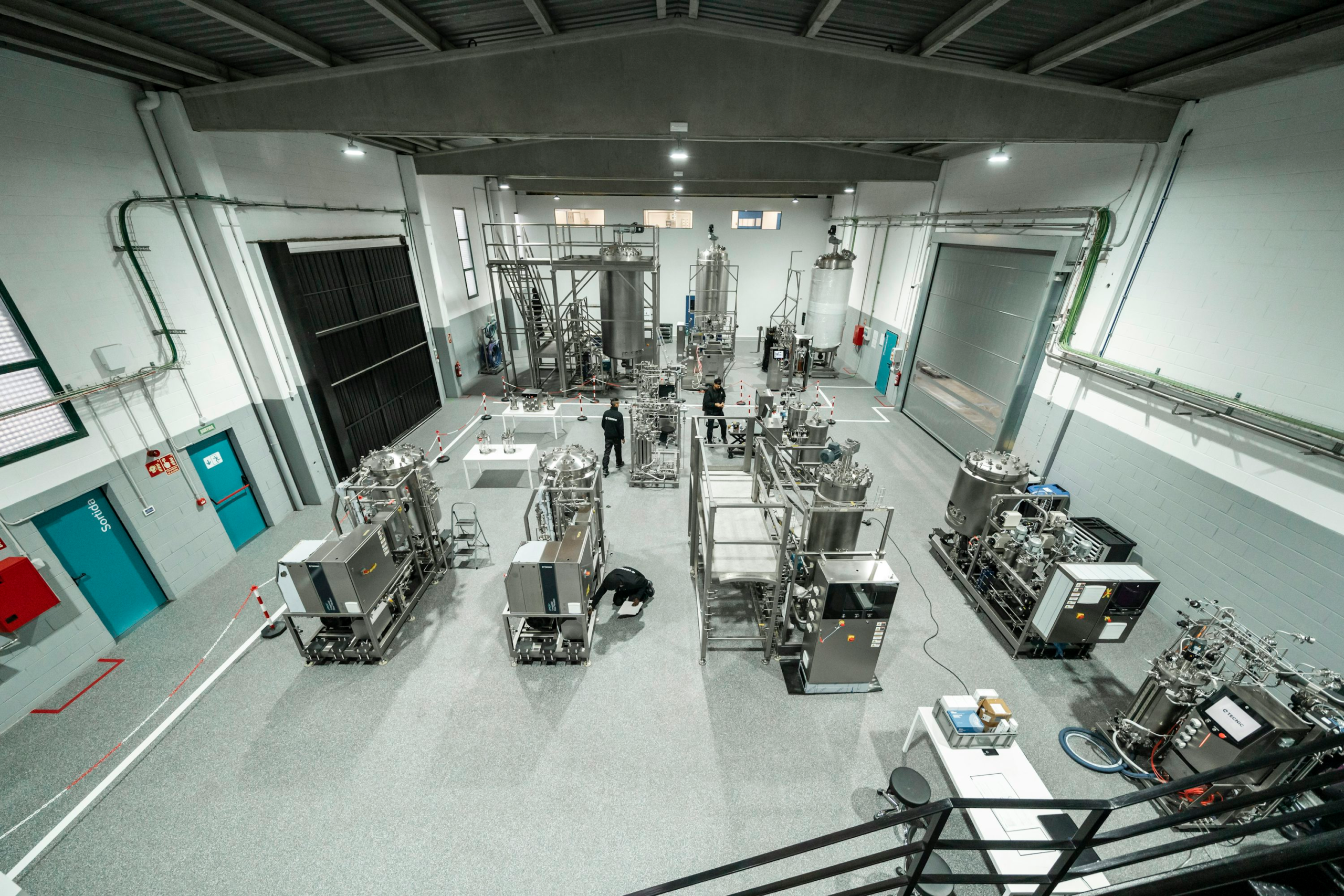
Scaling gas fermentation introduces requirements that extend beyond increasing vessel size. The microorganisms must receive the necessary gases and nutrients under suitable process conditions, while mixing, temperature control and mass transfer need to support biological activity throughout the production volume.
Gas transfer can become a limiting factor because the required substances must move from the gas phase into the liquid culture. The equipment must also control heat generated during processing, maintain appropriate operating conditions and accommodate cleaning procedures that protect the production system from unwanted contamination.
Downstream operations introduce a further set of constraints. Once the biomass has been produced, it must be recovered and processed into an ingredient with the required moisture content, composition, microbiological quality and functional properties.
Those characteristics influence how the finished ingredient performs in food manufacturing. Protein powders can differ in hydration, dispersibility, flavour and heat stability, affecting blending, processing and the properties of finished products.
Solar Foods has been developing Solein for protein-enriched foods and beverages, including applications where the ingredient supplements or replaces other protein sources. During 2026, the company also reported development work to improve its suitability for liquid products, including changes affecting powder solubility.
The proposed Factory 02 development brings these formulation requirements into contact with manufacturing economics. Industrial production will need sufficient equipment utilisation, dependable energy supplies and consistent downstream processing to support the volumes required by commercial customers.
Solar Foods has been building the project's engineering partnerships ahead of the investment decision. GEA has entered into an exclusivity arrangement to negotiate the supply of process equipment and related services, while Fortum is undertaking development work covering hydrogen production, heating, cooling and electricity infrastructure.
The Fortum agreement does not represent a completed investment in the energy facilities. It covers design and pre-engineering work intended to support the proposed plant, with final commitments dependent on subsequent project decisions.
Business Finland has also granted funding decisions totalling approximately €77.8m, comprising grant and loan support associated with Factory 02. The funding is conditional on the investment decision and the company securing the required overall financing.
These arrangements illustrate how the proposed plant depends on several coordinated industrial systems. Fermentation equipment, hydrogen supply, electricity infrastructure, heat management and downstream processing must be developed alongside contractual arrangements for the resulting ingredient.
Commercial qualification will remain a separate requirement. Manufacturers considering Solein must establish whether it meets their formulation specifications and performs consistently under the processing conditions used for their products.
The EFSA opinion reduces uncertainty surrounding access to the European market, but it does not resolve those technical and financial requirements. Solar Foods must still obtain final authorisation, secure binding demand and complete its investment arrangements before Factory 02 can proceed.
The next confirmed regulatory milestone will be the Commission's authorisation decision. Progress towards Factory 02 will depend on the separate commercial and financing milestones needed to support the proposed increase in Solein production capacity.