IN Brief:
- AFYREN NEOXY has exceeded 1,000 tonnes of cumulative bio-based acid production, including 200 tonnes since its July restart.
- Demonstrated production capacity has reached 30% several times and 40% during a 48-hour period following June plant modifications.
- AFYREN is targeting another doubling of NEOXY revenue in the second half as longer production runs test whether the higher rates can be sustained.
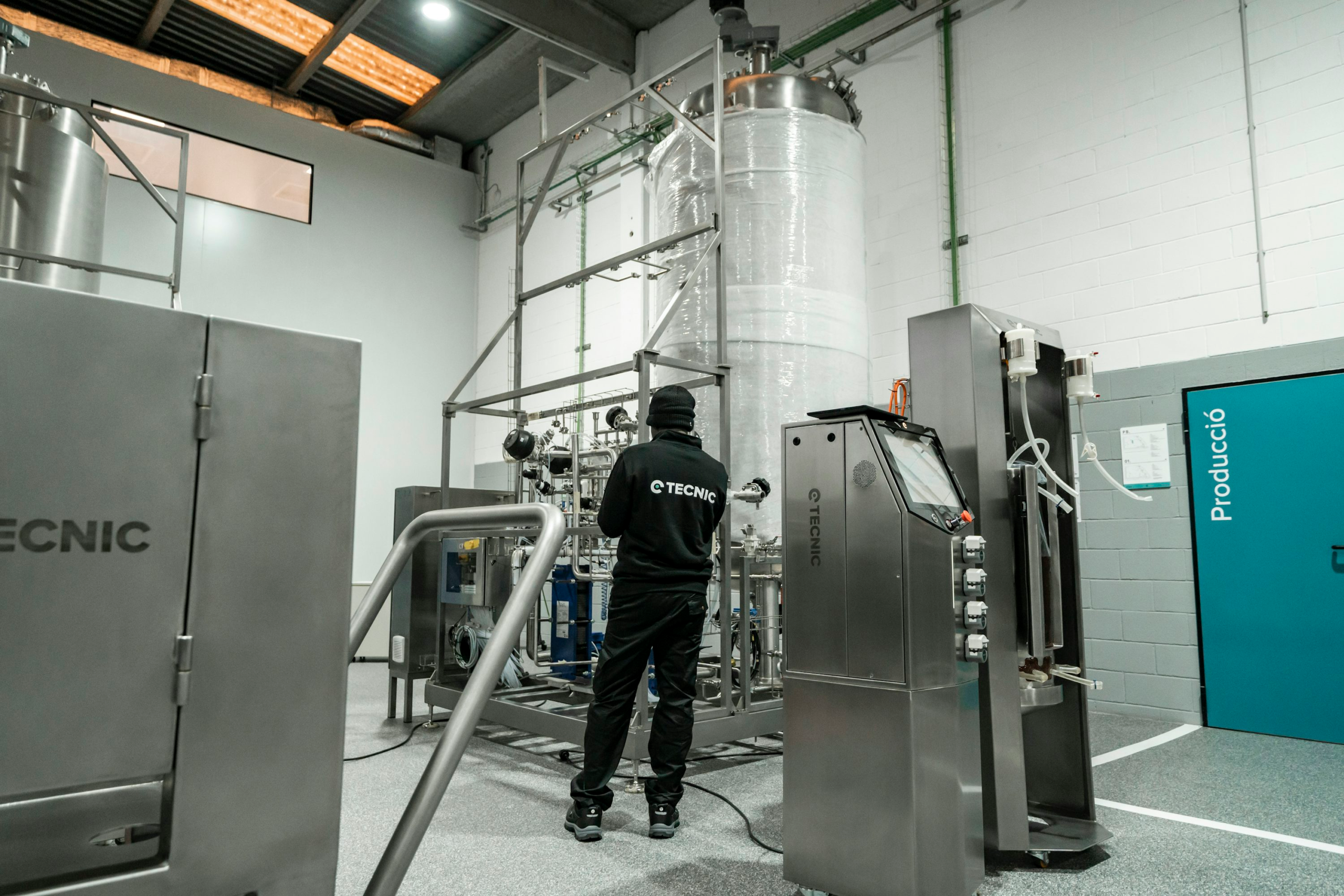
AFYREN has produced more than 1,000 tonnes of bio-based organic acids at its NEOXY plant in Carling Saint-Avold, France, as the fermentation facility continues its industrial ramp-up following major process work in June. Around 200 tonnes of the total have been manufactured since production restarted in July.
The latest operating data provides a clearer measure of progress than the cumulative tonnage alone. AFYREN says demonstrated production capacity has reached 30% on several occasions and was pushed to 40% for a 48-hour period after the June modifications, although those rates still have to be reproduced over longer production runs.
The plant is therefore past the point where the principal question is whether its process can produce the intended acids. Attention has shifted to how consistently the upstream fermentation and downstream processing stages can operate together for extended periods, because brief demonstrations at higher throughput do not carry the same commercial value as reliable output maintained across routine production campaigns.
NEOXY uses fermentation to manufacture bio-based carboxylic acids from non-food agricultural co-products. AFYREN markets the resulting ingredients across applications including human and animal nutrition, flavours and fragrances, life sciences, materials, and industrial formulations, with food applications including preservation and mould-control functions.
That puts production stability at the centre of the commercial case. Food ingredient customers require repeatable purity, specification control, delivery performance, and sufficient available volume to qualify a supplier into established formulations. A biological production route may change the feedstock base, but it does not reduce the quality and continuity requirements placed on an industrial ingredient producer.
Longer production runs become the next test
The June shutdown was designed to tackle technical bottlenecks that had constrained the plant during its earlier ramp-up. Since restarting, NEOXY has been used to test the modified process at progressively higher rates, with the 40% demonstration providing evidence that greater throughput is technically available even though the company is not yet describing that level as sustained operating capacity.
AFYREN chief operating officer Laurent Pou said the company now wants to “embed these performance levels into our daily operations”, with longer production periods and continuous process improvement forming the next stage of the programme.
Moving from short demonstrations to routine production generally puts different stresses on a fermentation plant. Biological conditions have to remain within operating limits while separation, purification, water recycling, utilities, storage, and product handling continue without creating a downstream constraint. Maintenance requirements also become more visible as equipment accumulates operating hours rather than running intermittently.
Water management has formed part of NEOXY’s latest operating assessment. AFYREN says the plant process and its water-recycling system continued to function during recent periods of high temperatures and water stress, an important operating consideration for fermentation facilities that rely on controlled process conditions and substantial water circulation.
Commercial expectations are now being tied directly to the manufacturing curve. AFYREN is targeting at least another doubling of NEOXY revenue in the second half of 2026 compared with the first half, which will require increased production to translate into customer deliveries rather than remaining a purely technical performance measure.
The company has also indicated that new commercial contracts are progressing, adding pressure to establish a dependable production rhythm. Qualification by customers can take time, particularly where an ingredient performs a functional role in food formulation, and increased sales commitments need to be supported by enough capacity to supply existing and new accounts simultaneously.
That relationship between sales and utilisation is where many industrial biotechnology projects encounter their hardest scale-up period. A pilot process can demonstrate chemistry and product quality with relatively small volumes, while a commercial installation has to reproduce the same output repeatedly, control losses, manage downtime, and spread its fixed costs over far greater throughput.
NEOXY’s 1,000-tonne milestone shows that the facility is accumulating meaningful production experience, while the 30% and 40% demonstrations indicate that the June work has expanded its operating envelope. Neither figure removes the need for longer campaigns at those rates, and AFYREN has been explicit that the higher capacity still needs confirmation over extended periods.
The next operating figures should consequently be more revealing than the latest cumulative total. Sustained production hours, plant utilisation, and second-half revenue will show whether the July restart has established a repeatable manufacturing platform or whether further technical work is required before NEOXY reaches a steadier commercial phase.