IN Brief:
- Nelson-Jameson has added −60°C culture storage at its Turlock, California, distribution centre.
- The facility will hold specialist cultures for cheese and fresh dairy production closer to West Coast processors.
- Further regional culture storage is planned in Idaho after an earlier expansion in Pennsylvania.
Nelson-Jameson has added ultra-low-temperature culture storage at its Turlock, California, distribution centre as it builds a regional cold chain network around major US dairy-producing areas.
The new storage operates at −60°C, or −76°F, and is intended for specialist cultures used in cheese manufacturing and fresh dairy products. Holding those materials on the West Coast reduces the distance between controlled storage and dairy plants while increasing the amount of regional inventory available to processors.
The project follows a similar culture-storage investment at Nelson-Jameson’s Fairview, Pennsylvania, distribution centre in April. The company also plans to add culture storage at Jerome, Idaho, extending the model to customers across Idaho, Utah, and the Pacific Northwest.
Dairy cultures occupy little warehouse space compared with milk, powders, packaging, or finished cheese, but their absence can stop production. A plant may have labour, milk, vats, utilities, packaging, and refrigeration available and still be unable to begin the required fermentation if the correct culture has not arrived in usable condition.
Ultra-low-temperature storage protects those ingredients before use. Nelson-Jameson distributes cultures through supplier relationships including dsm-firmenich, with products used to influence acidification, flavour, texture, and other characteristics in cheese and cultured dairy production.
The performance of a culture depends on maintaining suitable storage conditions throughout the logistics chain. Long journeys increase the amount of time during which insulated packaging, dry ice, carrier handling, weather, and unexpected delays can influence temperature exposure.
Regional inventory shortens that chain. Turlock gives West Coast processors access to culture stock held closer to production, reducing transit time and allowing replenishment to move through Nelson-Jameson’s own distribution system and NEXT Logistics routes.
The company expects the change to reduce reliance on third-party carriers and decrease dry ice consumption. Those savings sit alongside the more important production objective of improving the probability that the required culture is available and within specification when a dairy plant needs it.
Cold chain resilience for cultures is a different problem from moving bulk chilled ingredients. The financial value of the shipment itself may be modest relative to the amount of dairy production dependent on it, so a disruption can have consequences far larger than the cost of replacing the affected package.
Regional storage also allows dairy plants to carry less specialist inventory on site if replenishment lead times become shorter and more predictable. Factory cold space is then reserved for immediate production needs while a distributor maintains the wider assortment required across several customers and product types.
That assortment can be extensive. Different cheese varieties and cultured products require different organisms and combinations, with culture selection influencing acidification rate, flavour development, texture, gas formation, and process timing.
Substitution is therefore limited. A plant cannot simply replace a delayed culture with another product without reviewing formulation, production conditions, finished-product characteristics, specifications, and potentially labelling or customer requirements.
Inventory accuracy becomes especially important in that environment. A regional warehouse has to control product identity, lot traceability, expiry, storage location, temperature, and replenishment while keeping enough stock to protect production without allowing specialist materials to age unnecessarily.
The Turlock site operates as a state-registered food warehouse and is audited annually under the Safe Quality Food programme. Nelson-Jameson states that the location has achieved a 100% SQF audit score for ten consecutive years.
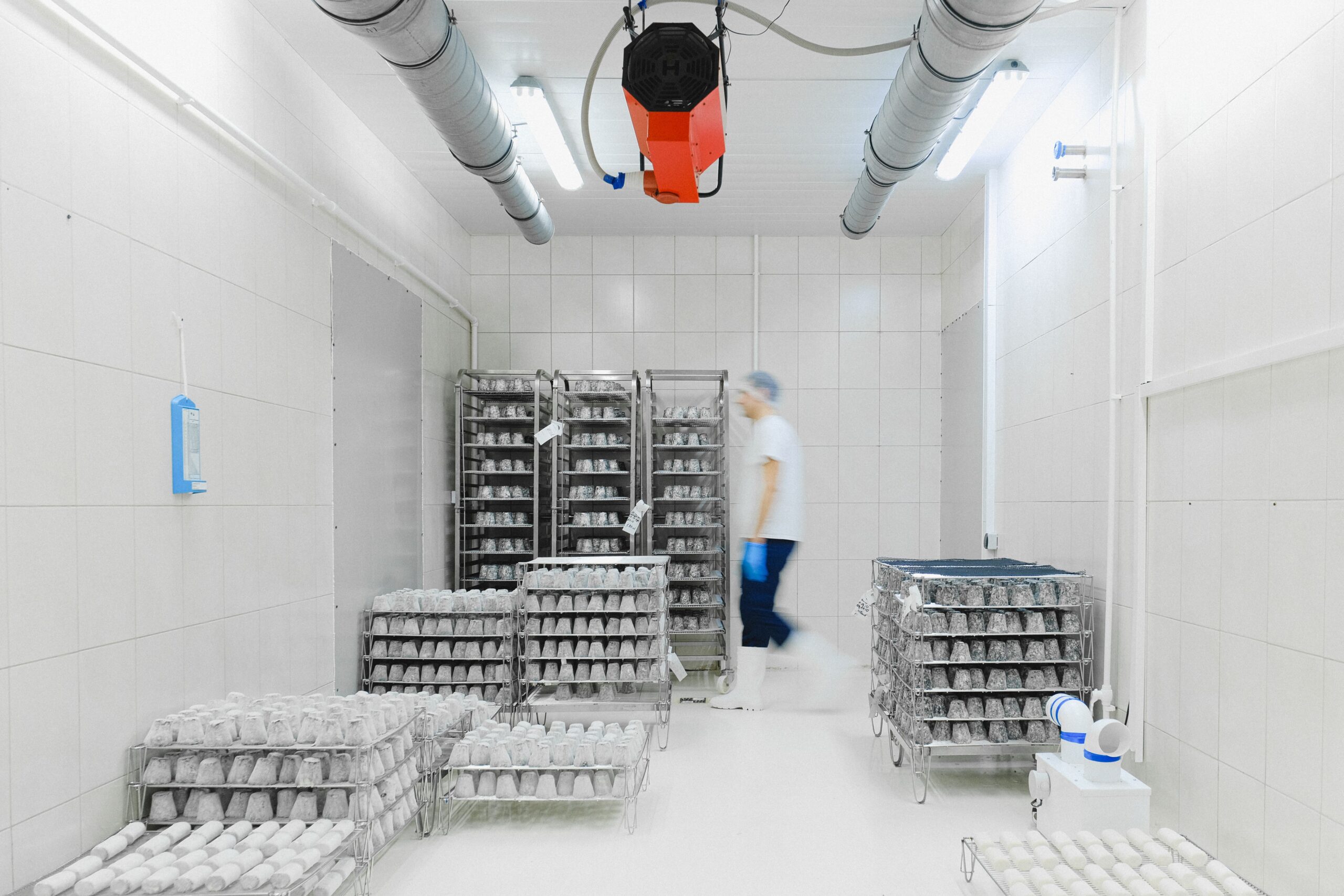
Maintaining −60°C conditions adds another layer of engineering compared with a conventional chilled distribution centre. Refrigeration capacity, insulation, door management, alarms, temperature monitoring, maintenance, and contingency arrangements all become critical because a prolonged equipment failure can affect the complete stored inventory.
Equipment also has to cope with local ambient conditions. California heat increases the importance of managing temperature exposure during receiving, picking, loading, and vehicle transfer, even where the principal storage system remains well below freezing.
The cold room therefore forms only one part of the chain. Cultures still have to move between supplier, warehouse, delivery vehicle, and dairy plant without losing the storage discipline established inside the distribution centre.
Nelson-Jameson’s Pennsylvania investment established the regional model earlier this year. That site brought culture stocks closer to Northeast dairy processors, while Turlock applies the same approach to the West Coast and Jerome is intended to extend coverage through another major dairy region.
The network reduces dependence on a small number of long-distance shipments without requiring each dairy manufacturer to create its own deep inventory of specialist cultures. It shifts part of the buffer into regional distribution centres positioned closer to where the ingredients are consumed.
Dairy production is particularly suited to that arrangement because cultures combine low physical volume with high operational importance. The amount of freezer space required is relatively small compared with the manufacturing capacity that the stored ingredients can support.
Turlock therefore represents a logistics investment whose value is ultimately measured in factory continuity. Shorter lead times, lower exposure to transport disruption, and controlled ultra-cold storage all serve the same objective: ensuring the right culture arrives active and within specification when the production schedule calls for it.