IN Brief:
- Polysmart plans to commission the first phase of its expanded Mowe recycling facility on 29 October.
- At full capacity, the $60 million plant targets 100,000 tonnes of annual input, producing 60,000 tonnes of food-grade rPET and 20,000 tonnes of other recycled plastics.
- EREMA, SOREMA and TOMRA are supplying processing and sorting technology, while Polysmart plans to expand its collection network by 250 centres.
Polysmart Packaging Limited plans to commission the first phase of its expanded plastic recycling facility in Mowe, Ogun State, on 29 October. The Nigerian company puts the investment at $60 million and says the completed operation is designed to process up to 100,000 tonnes of post-consumer plastic feedstock annually, with a substantial proportion intended for food-grade recycled polyethylene terephthalate (rPET).
At full capacity, Polysmart projects annual output of 60,000 tonnes of food-grade rPET and 20,000 tonnes of other recycled plastics. The figures describe planned production capability, not material already sold or a verified operating result. The company has not disclosed a measured throughput for the first phase or a timetable for reaching the full design capacity.
The Mowe development incorporates processing and sorting equipment supplied by EREMA, SOREMA and TOMRA. The three manufacturers supply technologies used in different stages of plastic recycling, but Polysmart has not published a complete line configuration or individual machine capacities. Their involvement does not, by itself, establish the recovery yield or food-contact approval status of the finished plant.
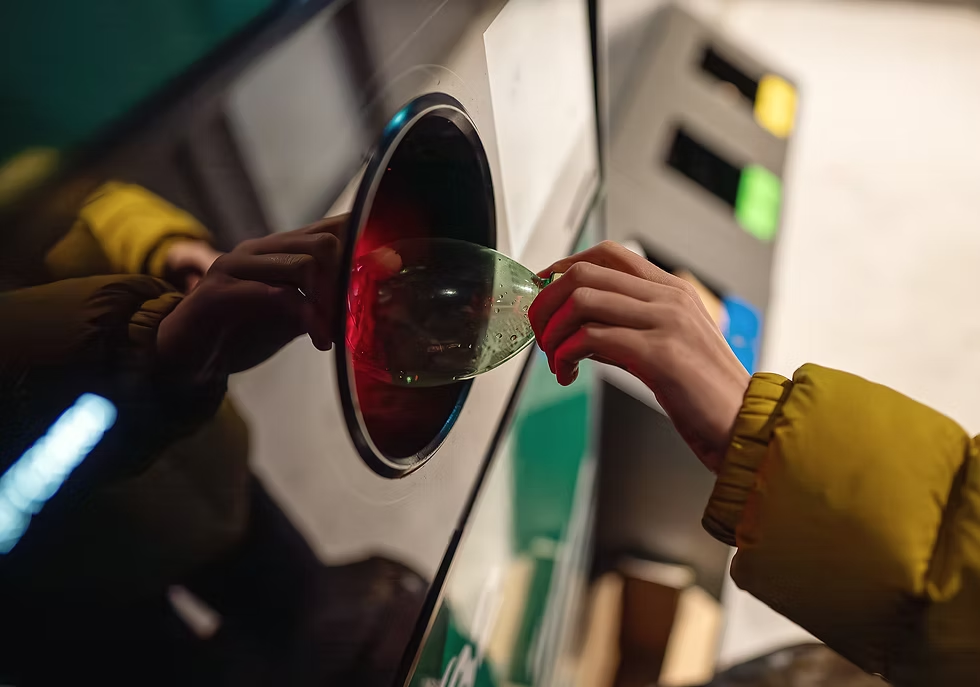
Incoming bottles require sorting because collected packaging can contain different polymers, colours, labels and residues. PET must be separated from materials that could affect subsequent treatment, while non-PET components and unsuitable items need their own recovery or disposal routes. Variability in the incoming stream affects both the amount of usable polymer recovered and the consistency of the material supplied to customers.
Mechanical PET recycling typically includes sorting, size reduction and washing before the recovered polymer undergoes further treatment. Those stages remove foreign material and prepare flakes for conversion into a usable feedstock. Recycled resin intended for packaging may then require additional purification and processing, with controls selected for the properties and intended use of the finished material.
Recycled PET intended for contact with food needs different controls from material used in non-food packaging. Bottles collected after use may have been contaminated by substances unrelated to their original contents, and conventional cleaning does not automatically demonstrate that all relevant contaminants have been reduced sufficiently. A process intended to produce food-grade rPET needs suitable feedstock controls, validated decontamination performance and evidence that the resulting material meets the applicable specification.
Polysmart says its recycling processes are designed to meet standards associated with the US Food and Drug Administration and the European Food Safety Authority. Neither statement identifies an individual regulatory decision authorising this particular installation. The FDA evaluates recycling processes and their intended food-contact uses, while EFSA conducts scientific assessments under the European framework; EU authorisation decisions are made by the European Commission and member states.
Any intended food-contact packaging application requires qualification of the recycled material for that use. Recycled PET can be used in products with different requirements for processing, clarity, mechanical performance and the conditions under which food contacts the pack. The supplier’s description of food-grade output is not a substitute for evidence covering the actual recycling process and intended use.
Polysmart’s planned 100,000-tonne input capacity differs from its 60,000-tonne food-grade output target. Sorting losses, contamination, moisture and operational downtime will influence realised yields once the plant is running. The announced targets for food-grade rPET and other recycled plastics cannot be assumed to apply to the first commissioned phase.
At full capacity, the plant would require a sustained supply of suitable recovered bottles. Polysmart says it currently operates 25 aggregation centres across eight Nigerian states and plans to add 250 more across the country’s 36 states over two years. These facilities are intended to consolidate recovered material from collectors and suppliers before onward transport to the recycling operation.
The existing collection network must supply bottles in sufficient quantities and at a quality that the sorting and washing systems can handle economically. The additional centres are planned, not completed, and Polysmart has not disclosed the annual tonnage currently supplied by its existing network.
The company estimates that the wider investment could create approximately 1,000 direct jobs and more than 50,000 indirect opportunities in collection, sorting, transport and associated activity. These are projections rather than independently verified employment totals. Actual recruitment will depend on the operating phases introduced and the scale achieved in the collection network.
Polysmart also forecasts foreign-exchange savings of around $72 million annually through reduced imports of virgin plastic resin. The calculation assumes that locally produced recyclate displaces imported material at a commercially meaningful scale. The company estimates annual Nigerian virgin PET consumption at about 600,000 tonnes, but has not published the detailed assumptions behind its savings forecast.
Alongside food-grade rPET, Polysmart projects 20,000 tonnes of other recycled plastics annually at full capacity. The company has not provided a detailed breakdown of those finished polymer grades or their intended applications. Suitable separation and processing arrangements will be needed to prevent unsuitable materials from entering the food-grade PET stream, while allowing other recoverable plastics to be processed for their respective markets.
The formal commissioning is scheduled for 29 October at Polysmart’s site on the Lagos–Ibadan Expressway. That event will mark the planned introduction of the first phase, not proof that the entire factory has reached steady-state output. Production data, qualification of food-contact applications and material deliveries to packaging customers will provide a firmer measure of the expanded operation once commissioning is complete.