
IN Brief:
- Rodda’s officially opened its purpose-built cottage cheese operation at Scorrier on 27 October.
- The £6 million investment provides projected capacity of 4,000 tonnes annually and has created 20 skilled jobs.
- The facility offers a further manufacturing outlet for skimmed milk from the creamery’s existing operations.
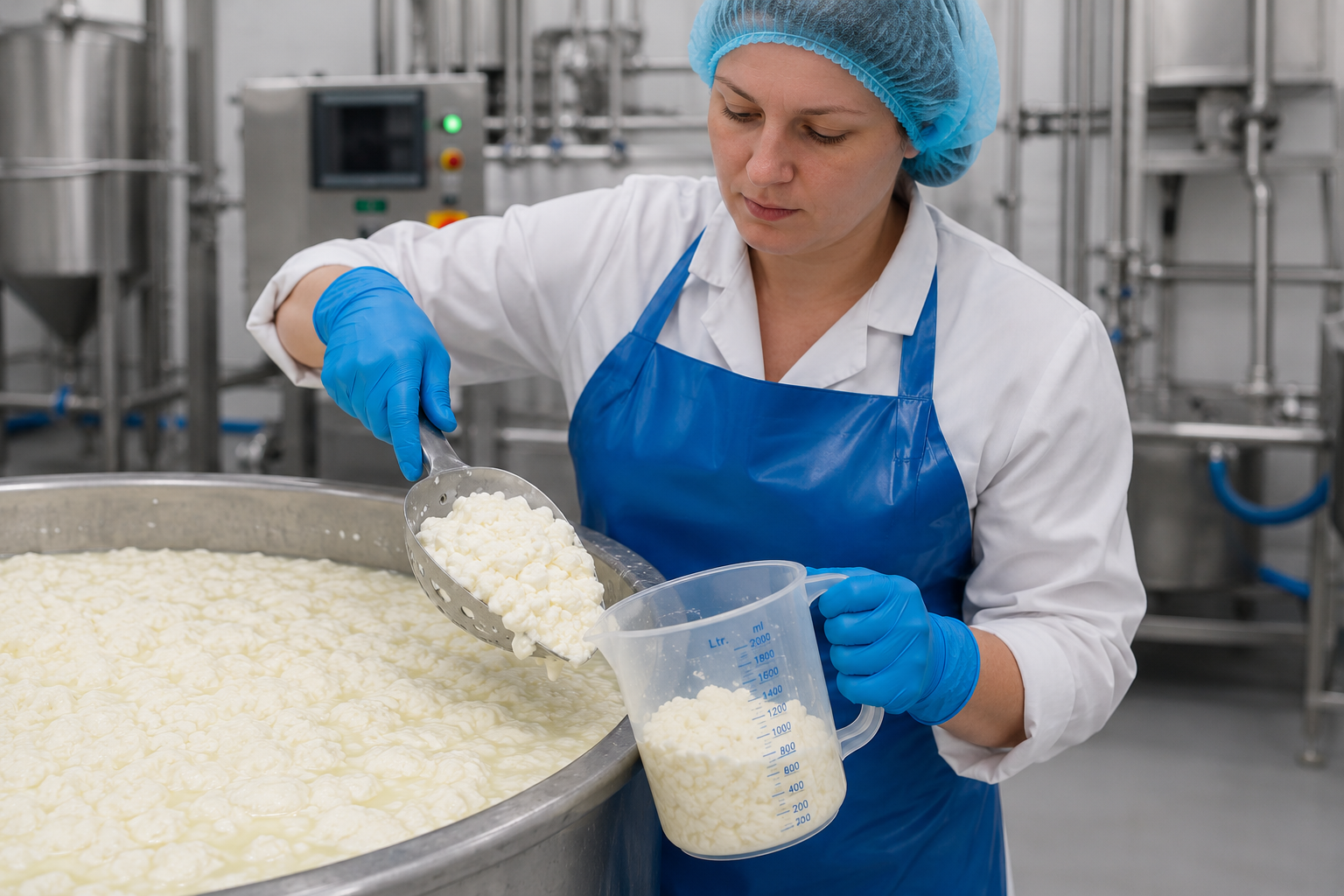
Rodda’s has formally opened its £6 million cottage cheese production facility at Scorrier in Cornwall, adding a new manufacturing operation to the family-owned dairy’s established creamery. The purpose-built plant has a projected annual capacity of up to 4,000 tonnes and has created 20 skilled jobs.
The Duchess of Gloucester officially opened the facility on 27 October, touring the production area and meeting employees involved in the project. The visit marked the completion of an investment previously announced by Rodda’s, rather than a further commitment to expand the site. The company has not disclosed the volume of cottage cheese currently leaving the operation.
Rodda’s is best known for Cornish clotted cream, but its Scorrier business also manufactures butter and speciality milk products. The cottage cheese plant provides an additional route for processing milk components already available through the existing operation, reducing the proportion that must be sold into commodity markets.
The company handles approximately 61 million litres of milk annually from Cornish dairy farmers, according to figures released when the investment was announced in May. It said around 7% of its intake was used in clotted cream production, while substantial quantities of skimmed milk were sold for processing elsewhere. Cottage cheese manufacturing gives the business an opportunity to retain more of that material for finished food production.
Separating milk into cream and skimmed fractions creates ingredients with different compositions and commercial uses. Cream is central to Rodda’s established product range, whereas skimmed milk contains proteins and other milk solids suitable for processing into products with lower fat content. Cottage cheese production offers a means of converting part of that stream into a fresh dairy product rather than selling it solely as a bulk ingredient.
Cottage cheese is manufactured through controlled coagulation of milk proteins to form curds, followed by separation of whey and preparation of the curd to the desired finished specification. Acidification, temperature and processing time affect curd formation, while subsequent handling influences particle size, moisture content and texture. Consistency becomes particularly important when the product is manufactured in repeated batches for retail supply.
Curd processing places different demands on equipment from the production of clotted cream. Vessels and associated handling systems must control the development and separation of curds while avoiding excessive mechanical damage. Washing, draining and preparation stages can alter the balance between moisture and solids, affecting the character of the finished cottage cheese.
The specialist machinery installed at Scorrier introduces these processing functions alongside Rodda’s existing dairy activities. The company has not identified individual equipment suppliers, published vessel capacities or disclosed the number of packs its filling operation can produce each hour. Its announced capacity therefore describes the overall manufacturing operation rather than a verified rate for a particular machine.
The product’s refrigerated distribution requirements add another consideration. Cottage cheese is a fresh dairy food for which product hygiene, temperature control and the integrity of the final pack are important. Production procedures must accommodate cleaning and sanitation of equipment, appropriate handling after processing and checks that finished products meet their specified microbiological and quality standards.
Rodda’s intends to supply cottage cheese to major UK retailers. The facility’s annual design capacity of 4,000 tonnes is not evidence that this volume has already been produced or contracted. Actual output will depend on milk allocation, production schedules, customer orders and the time required to increase utilisation of the new equipment.
The investment follows strong growth in the British cottage cheese market. Data cited when the project was announced showed UK spending reaching £102.2 million in the 52 weeks ending 28 December 2025, an increase of 41.9%. Purchase volumes increased 28.1% to 25.6 million kilograms over the same period. Those figures describe the wider retail category, not Rodda’s own sales or an output forecast for Scorrier.
Higher production capacity also changes how the creamery manages its incoming milk. Instead of treating skimmed milk principally as a material to be sold outside the business, Rodda’s can plan allocations between its existing product range and the new cottage cheese operation. The economic result will depend on processing costs, product demand and the value realised from finished cottage cheese relative to alternative outlets for the milk.
Milk composition and availability can vary through the year, requiring production planning to balance the requirements of different dairy products. A new processing operation adds flexibility, but it also introduces its own demands for utilities, packaging materials, maintenance and labour. Rodda’s has not published comparative operating costs or a measured improvement in milk utilisation since the cottage cheese facility began operating.
The investment has been supported by £500,000 from the UK Shared Prosperity Fund, allocated through Cornwall’s Good Growth Programme. That contribution formed part of the previously disclosed development funding. It was not an additional grant awarded at the opening ceremony.
The 20 jobs associated with the facility increase the company’s manufacturing workforce in Cornwall. Operators must manage the specific controls required for curd production, finished-product preparation and quality assurance, while maintenance and packaging functions support the flow of material through the new process.
The official opening establishes an additional production capability at Scorrier and a further market for skimmed milk purchased from local farming families. Rodda’s has confirmed the facility’s investment value, projected capacity and employment contribution; subsequent production volumes will determine how extensively the new operation is used.