IN Brief:
- Polytag has installed its 15th Ecotrace UV detection unit at Wyllie Recycling's material recovery facility in Perth.
- The facility handles approximately 15,000 tonnes of post-consumer plastic packaging annually.
- The system records identification data when tagged packaging passes a scanner; it does not independently verify that the material was successfully recycled.
Polytag has extended its Ecotrace packaging detection network into Scotland with an installation at Wyllie Recycling’s material recovery facility in Perth. The equipment is the company’s fifteenth ultraviolet detection unit and allows tagged packaging entering the facility to be identified as part of the sorting operation.
The Perth deployment adds a new geographic area to Polytag’s existing network of UK recycling facilities. Wyllie Recycling processes approximately 15,000 tonnes of post-consumer plastic packaging annually at its 4.5-acre material recovery facility, which handles twin-stream kerbside collections for several Scottish local authorities.
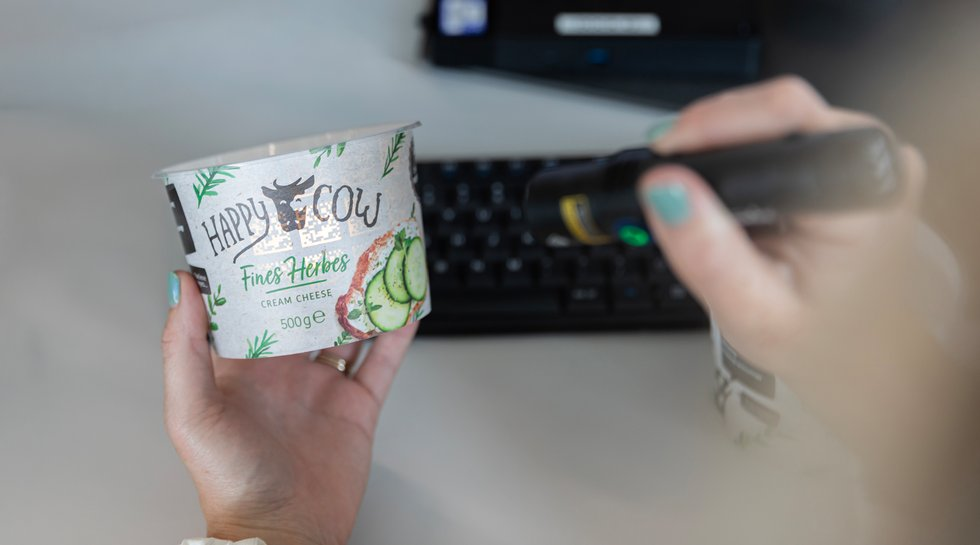
Ecotrace uses invisible ultraviolet-responsive markings incorporated into packaging artwork. When a marked item passes a compatible scanner, the system detects the tag and records information associated with that packaging. The resulting data can identify a product or packaging format and the location at which it was observed within the recycling network.
Polytag says the system captures barcode-level identification data, including where and when particular packaging was detected. Additional information associated with the identification may include the packaging converter, material characteristics and food-grade status. Those details are connected to the record of the pack; they are not necessarily measurements of the recovered plastic made by the scanner itself.
Packaging entering a material recovery facility can include multiple polymer types and formats. Bottles, pots, tubs and trays may differ in their resin composition, colours, labels and barrier structures, while contamination from contents or unrelated waste can affect the quality of the recovered stream. Optical identification can provide another source of information alongside the physical sorting methods already used by recycling operators.
The technology is based on adding a detectable marker during packaging production. An ultraviolet-responsive ink can carry an identification signal without changing the prominent consumer-facing design. Detection equipment then reads the mark after disposal, provided the item passes within an appropriate scanning position and the marking remains accessible to the sensor.
The scanner does not identify packaging that never reaches a participating facility or that passes through the recycling system without being read. Collection routes, sorting arrangements and the distribution of participating scanners therefore affect the completeness of the data. Expanding the network to Perth increases potential coverage, but it does not produce a complete national account of all packaging placed on the market.
Wyllie Recycling’s facility handles plastics collected through established kerbside arrangements. Those materials may be separated by type and quality before being transferred for further processing. Polytag’s equipment adds a detection record within that sequence; it is not described as replacing the site’s existing separation machinery or introducing a new recycling process.
Detection must also be distinguished from completed recycling. A tagged bottle recorded at the Perth site has reached an enabled point in the collection and sorting system. It may still need to undergo separation, cleaning and reprocessing before its material becomes suitable for manufacture into another product. The detection event alone cannot establish the weight of usable polymer eventually recovered from that item.
The distinction becomes particularly important when packaging carries information about its original food-contact application. A record identifying a pack as food-grade material may assist an operator in understanding the incoming stream, but it does not prove that the recovered plastic meets the requirements for use in new food packaging. Feedstock control, decontamination and relevant regulatory assessments remain necessary.
For packaging producers, location-specific detection records can help compare where tagged products enter recycling infrastructure. A manufacturer may assess differences between packaging formats or collection areas, provided it accounts for the limits of the participating network. The results cannot be interpreted as a national recycling rate without appropriate information on the wider quantity of packaging placed on the market and its subsequent treatment.
The Ecotrace programme has already been used at recovery sites elsewhere in the UK. In October, the company was reported to have detection infrastructure at fourteen recycling facilities; the Perth deployment takes the network to fifteen units. Earlier installations have included equipment at the Crayford material recovery facility, giving brands a means of observing tagged packaging through another part of the collection system.
Wider geographic coverage can improve the usefulness of a dataset when products are distributed nationally. Packaging sold through the same retailer may enter recycling facilities in different regions, and its visibility will depend on whether the destination site has the relevant technology. A further scanner increases the number of locations supplying data without removing those sampling limitations.
The information may also support packaging design decisions. Differences in material specification, labels, shapes and other components can affect sorting and downstream processing. Linking packaging records to detection locations gives producers another basis for examining the movement of selected pack designs through existing collection infrastructure, although additional evidence is needed to establish the recycling performance of each design.
Polytag is positioning the data within the wider development of packaging Extended Producer Responsibility obligations. The UK’s framework increases the importance of accurate information about packaging materials and their management after use. Ecotrace records may contribute supporting evidence, but they do not independently satisfy every statutory reporting requirement or determine the fees payable for an individual package.
The Perth installation has been reported alongside recognition for the Ecotrace programme in TIME’s 2026 inventions list. That recognition concerns the wider technology and should not be confused with a separate equipment deployment. Polytag has not disclosed the cost of the Wyllie installation or the number of tagged packs it has detected since commissioning.
The Scottish unit extends a system intended to connect packaging identification with observations made after collection. Its operational results will depend on the quantity of tagged material reaching Wyllie Recycling, the consistency of scanning and the use made of those records by participating manufacturers and packaging producers.