IN Brief:
- SIG Neo XSlim 32 Aseptic is rated for up to 32,000 single-serve cartons per hour across nine pack sizes.
- SIG Neo Midi 15 Aseptic handles up to 15,000 multi-serve cartons per hour across two carton formats.
- Both machines are designed to raise output per square metre while supporting format changes in under 15 minutes.
SIG has expanded its Neo aseptic filling platform with two machines designed to increase carton output without requiring a corresponding increase in production floor space.
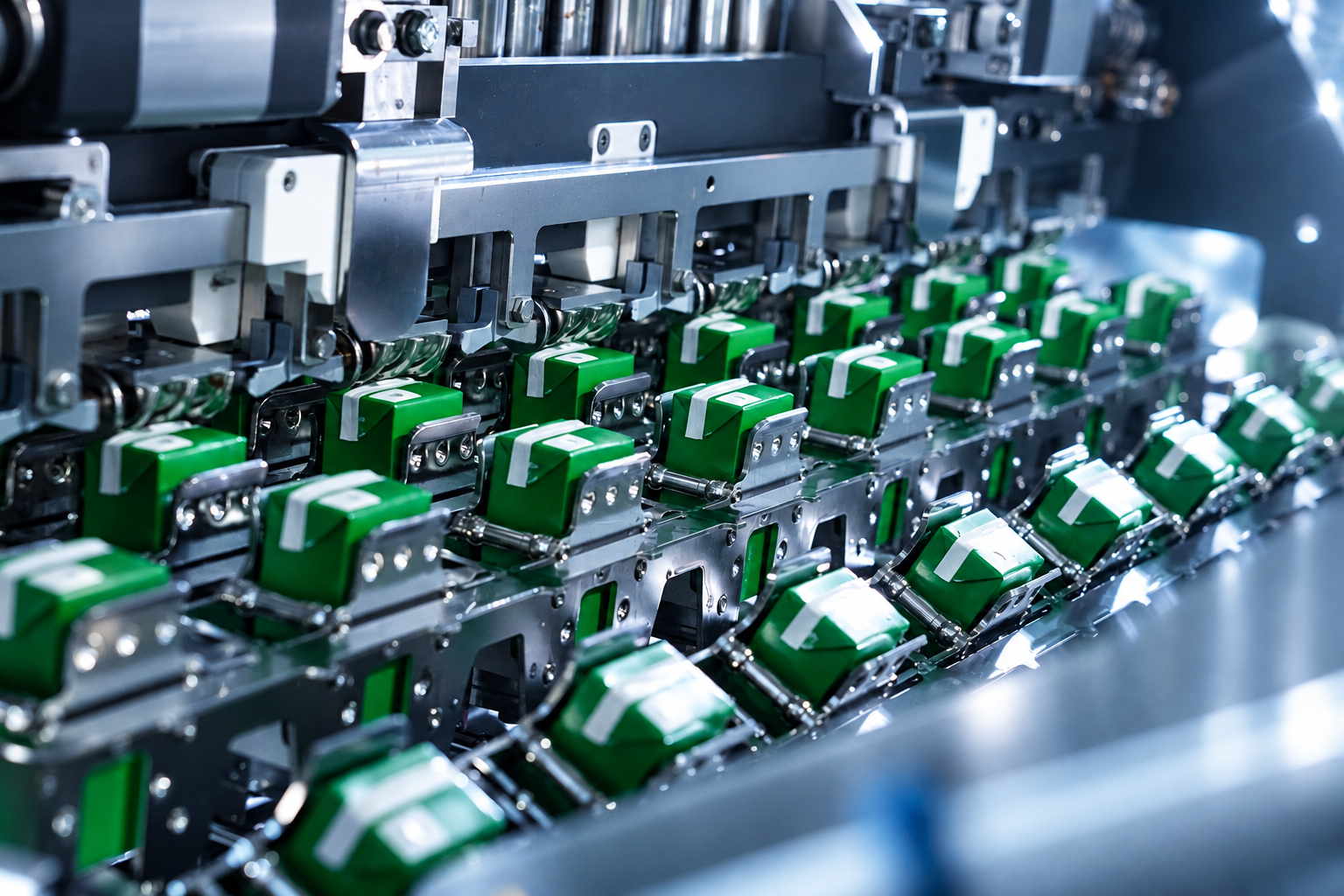
The SIG Neo XSlim 32 Aseptic is designed for single-serve cartons and is rated for up to 32,000 SIG XSlimBloc packs per hour. It can run nine pack sizes between 80ml and 200ml on the same machine, giving beverage and liquid-food producers a relatively broad range of formats from one filling platform.
The second machine, SIG Neo Midi 15 Aseptic, is aimed at larger packs and is rated for up to 15,000 cartons per hour. It handles SIG MidiBloc and SIG MidiFit formats, with three pack sizes available for each between 500ml and 1,000ml.
SIG says both machines increase total output and output per square metre by around one third compared with its standard filling machines for the respective formats. The comparison places factory footprint alongside nominal line speed, reflecting the limits faced by producers whose existing sites have little room for physical expansion.
The machines use SIG’s sleeve-based carton technology and open-sleeve filling process. Pack size and format changes can be completed in less than 15 minutes without changing machine parts, reducing the production time lost when a filling line moves between SKUs.
That flexibility becomes increasingly useful as manufacturers carry broader product ranges through the same factory. A single beverage or liquid-food line may be expected to accommodate several volumes, flavours, formulations, and market-specific packs during a normal production week, with each changeover reducing the time available for saleable output.
Fast changeovers do not remove that penalty completely, but they can make shorter production campaigns more practical. The production benefit depends on repeatability: a nominally quick change must remain reliable across shifts and operators, without creating additional adjustment, cleaning, or start-up losses after the format switch.
SIG also states that the two Neo machines operate with waste rates below 0.5%. That figure will be closely watched in commercial operation because additional filling speed has limited value if increased rejects or start-up losses offset the extra throughput.
The equipment includes SIG Neo HMI, the company’s current human-machine interface for operating information and performance data. SIG Neo Shield is used around bottom sealing and pre-folding, with the company stating that the airflow system removes up to 95% of airborne particles in the relevant area.
Aseptic performance remains inseparable from output. The machine has to maintain sterile conditions while cartons are formed, filled, and sealed, and any intervention that compromises that environment can create considerably more production loss than a conventional mechanical stoppage.
Higher primary-packaging throughput also changes the duty placed on the rest of the line. Coding, inspection, accumulation, secondary packing, palletising, and internal logistics all have to accept the additional volume if the extra filler capacity is to translate into finished product.
A line rated at 32,000 packs an hour can therefore expose bottlenecks that were previously hidden downstream. Where case packing or pallet handling has been sized around an older filler, replacing the filling machine alone may simply transfer lost capacity to another point in the process.
Factory layout adds another constraint. Food and beverage plants accumulate utilities, access routes, hygienic zones, conveyors, maintenance areas, and material flows over years of operation. Adding floor area is rarely as straightforward as installing another machine, particularly where an existing filling hall already operates close to its physical limit.
Equipment capable of delivering more packs from the same area changes that calculation. A manufacturer can potentially add saleable capacity without constructing another filling room, although supporting services still have to be checked against the increased output.
Format range also affects capital planning. Running multiple pack sizes on one filler can avoid dedicating separate equipment to lower-volume products, provided the machine can switch between them without compromising production schedules or aseptic performance.
SIG produced around 54 billion packs during 2025 and generated revenue of €3.2 billion. The two new fillers extend its Neo programme towards higher-density production, with the engineering emphasis split between speed, floor-space utilisation, format flexibility, and aseptic control rather than maximum throughput alone.
The commercial test will be the amount of saleable product produced across a mixed operating week. Output per square metre is useful only when changeovers, cleaning, rejects, maintenance, and downstream handling remain controlled at the higher rate.